Seniors in mechanical engineering Brian Shieh, James Labuz and Andrew Greenhut, all students in course 2.009, Product Engineering Processes, had everything they needed to make their banana harvester work, right down to 25 pounds of green banana stalks.
But just hours before their mockup review for faculty and fellow students on Oct. 20, their PVC-pipe prototype was still wobbling in the Building 3 stairwell.
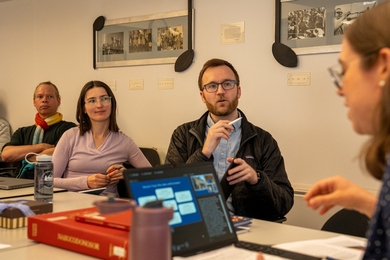
Team member Alex Nelson, also a senior in mechanical engineering, described the 2.009 assignment and outlined the banana team's plan.
"We're supposed to build a harvester to be used in agriculture. We designed a mechanism to make it easier to pick bananas and carry the bunches across the plantation for processing. Our idea is to have a cutting mechanism drop the 120-pound bunches into the bag, then use a pulley system to lower it," said Nelson.
The banana harvesting group is one-half of a team working on a harvesting products theme for 2.009. The other half is developing a citrus fruit harvesting system. After the mockup review, the students will pick the most promising of the two designs for development into a fully functional alpha prototype. The gala annual 2.009 final presentations will be held on Monday, Dec. 12.
The 2.009 banana harvesting team members are Shieh, Labuz, Greenhut, Nelson, Kim Straub, Jason Atkins, Becky Romatoski and Adam Kaczmarak. All are seniors in mechanical engineering.
A version of this article appeared in MIT Tech Talk on October 26, 2005 (download PDF).