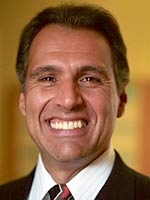
John DiFava, chief of the MIT Police since December 2001, has assumed additional responsibilities and is now director of security and campus police services.
DiFava's broader role involves coordinating security-related issues across the campus as well as directing MIT's Police Department. He will continue to be MIT's key liaison with municipal, state and federal agencies on public security issues.
MIT offices such as MIT Police; Parking and Transportation; the MIT Card Office; Facilities; Housing; Information Services and Technology; and the Environment, Health and Safety Office all have some responsibilities for security of buildings and the safety of the MIT community. DiFava will now be responsible for coordinating the diverse security-related roles across the Institute. He also will continue to assess campus facilities for vulnerabilities and lead the development of corrective actions. In particular, he will provide leadership for planning and installing site-appropriate controlled-access systems for campus buildings and will coordinate emergency response activities among a number of units.
"Chief DiFava has done a terrific job since he joined MIT," said Executive Vice President John R. Curry in announcing the expanded role. "John brings a wealth of experience to this new role. I would note in particular his assignment while still superintendent of the Massachusetts State Police to direct and coordinate security at Logan Airport in the months following Sept. 11.
"John has been working effectively over several months with MIT academic and administrative departments to address their security concerns, so in a sense we're formalizing the role he is already playing on our campus," Curry said.