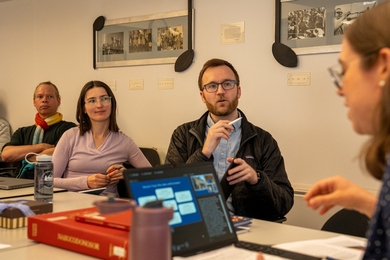
Working with DaimlerChrysler and Siemens employees, MIT students tackled the challenge of reaching three sites in Munich, Germany, using as many modes of transportation as possible. The challenge--which united engineers from the two German companies who meet only for soccer competitions across state borders once a year--was part of a series of workshops on a trip sponsored by the MIT-Germany Program, the German Academic Exchange Service and three firms.
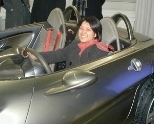
Fifteen students enrolled in the IAP subject "Solutions for Mobility in the 21st Century" visited a Lufthansa factory and flight simulator in Frankfurt and discussed cars of the future with employees of Daimler Chrysler and Siemens in Stuttgart, Munich and Regensburg. They also got behind-the-scenes looks at an assembly plant, car and engine test facilities, and a DaimlerChrysler high-performance F400 concept car.
To prepare for the Munich workshop, students made short videos on the transportation systems in their home cities. They played them during discussions about mobility in Munich and about the advantages and disadvantages of different means of transportation.
For more information and photos from the trip, see the web page made by Emily Sterzin, Miguel Molina and Ryan Tam from the link on http://web.mit.edu/mit-germany/explore.html.
A version of this article appeared in MIT Tech Talk on March 12, 2003.