A French cultural immersion program, "January Scholars in France," will offer a two-week experience in Paris during IAP 2003 for up to six undergraduates.
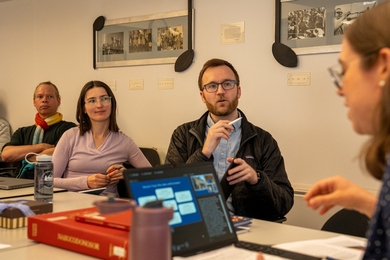
MIT offers other programs in foreign countries in which students focus primarily on subject matter that relates to their science, engineering or business curricula. But this program (funded by an MIT alumnus and his wife who wish to remain anonymous) is centered on the liberal arts. Students will attend plays, movies, concerts and operas; view exhibits at art and history museums; attend public and university-based lectures on cultural issues; and meet French people in the arts. They will participate in seminar-style discussions of these works and events, and they'll create a multimedia document of the trip after they return to MIT.
"This new initiative will certainly raise the visibility of our fine on-campus curriculum in French studies," said 2003 program leader Edward Baron Turk, professor of French studies and film. "Yet it will also allow our students to engage with French culture in an undistracted way that is virtually impossible during the typical academic semester. In effect, we're offering a select group of MIT undergraduates a liberal arts experience totally distinct from their preprofessional training, and which we hope will enrich their lives profoundly."
Scholars will be chosen each fall through a competitive application process. Applications this year are due by Oct. 11. Applicants must have completed or be in the process of completing one subject above French IV; declared French majors and minors will be given special consideration. Applications are available in Room 14N-305 and here. Winners will be announced on Nov. 1. For more information, call 253-4771.
A version of this article appeared in MIT Tech Talk on September 11, 2002.