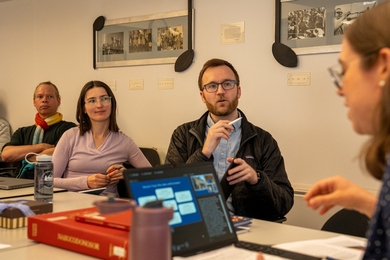
The Public Service Center and Tutoring Plus of Cambridge have received a $20,500 grant to conduct monthly training sessions to enhance the tutoring services provided by MIT student volunteers who work with elementary school students in the Tutoring Plus Homework Center.
In addition to the training sessions, the program, called MultipliCity, will inlcude monthly field trips with multicultural themes for students and volunteers. Sites to be visited include the Black Heritage Trail and Chinatown. The program matches MIT volunteer tutors with elementary school students in Cambridge.
"We're excited about combining multicultural awareness with academic support in a way that enhances mentoring relationships" said Assistant Dean Sally Susnowitz, director of the Public Service Center.
The MultipliCity Program grant was provided by the Massachusetts Campus Compact, a nonprofit organization that promotes community service and service learning in higher education.
MIT and Cambridge's Area IV Neighborhood Today started Tutoring Plus in 1964. In addition to financial support, MIT provides 20 to 50 volunteer tutors a year for low-income and academically at-risk children in three tutoring and mentoring programs in all classroom subjects. About 100 Cambridge public school students participate each year.
"The MultipliCity Program is an excellent complement to our existing relationship with MIT," said Tutoring Plus executive director Alison Vaughan.
Potential volunteers from the MIT community should be able to commit to tutoring one evening a week from 6:15 to 8 p.m. for at least one semester.
A version of this article appeared in MIT Tech Talk on December 5, 2001.