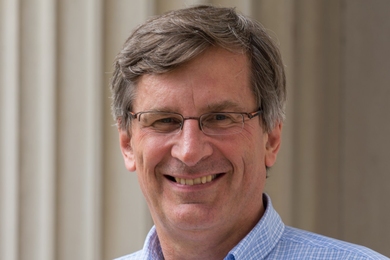
Sloan School Professor of Management and Economics Lester C. Thurow discussed innovation in the new, global, knowledge-based economy, and included an introduction to a concept he calls a "wealth pyramid" at Lemelson-MIT Program's Innovation Forum last week.
Professor Thurow, author of the upcoming Building Wealth: The New Rules for Individuals, Companies and Nations (Harperbusiness), contends that knowledge, for the first time in history, is the new basis for wealth. In the past, wealth was based on land, machinery or natural resources.
"In the future when capitalists talk about their wealth," he said, "they will be talking about their control of knowledge. The Bill Gateses of the world will be on top--not the Rockefellers, Carnegies or Morgans."
To compete in this new economy, companies and nations need to build a "wealth pyramid" using building blocks such as a solid social organization, entrepreneurial skills and education to encourage creativity and innovative behavior. "The world is on the verge of another industrial revolution, and not all nations will be ready for it," Professor Thurow said. "The challenge is creating and sustaining an entrepreneurial environment where change does not mean the end."
Professor Thurow has written several best-sellers including The Zero Sum Society and Head to Head. He is chairman of the Lemelson-MIT Program for invention and innovation, whose May 12 event was the last in its Innovation Forum series of on-campus speaking events designed to address innovation-related issues.
A version of this article appeared in the May 19, 1999 issue of MIT Tech Talk (Volume 43, Number 31).