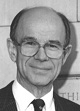
David Newland, professor of engineering at Cambridge University, will deliver the Department of Mechanical Engineering Distinguished Alumni Lecture at 4pm Thursday, April 15 in Rm 1-390.
In his lecture, "The Reality of Change," Dr. Newland will explore what drives the rate of change of technology. He will examine future prospects for engineers, as well as the role of regulation and the importance of sustainability. "Engineers may be the engines of innovation, but successful innovators must also be entrepreneurs who understand commercial needs and respond to the wider issues that society raises," said Dr. Newland in an abstract of his talk.
Professor Newland, who is a deputy vice chancellor of Cambridge University as well as head of its engineering department, earned the ScD in mechanical engineering from MIT in 1963. He was an assistant professor of mechanical engineering at the Institute from 1963-64, a lecturer at Imperial College 1964-67 and professor of mechanical engineering at Sheffield University from 1967-76. He has been professor of engineering at Cambridge University and Fellow of Selwyn College since 1976.
His talk will be the fourth and final of this year's Distinguished Alumni Lectures, a series established by the Department of Mechanical Engineering in 1991. Generally, three or four alumni/ae are brought in each year for two-day campus visits to meet with the department head, selected faculty and students. The program allows eminent alumni/ae to remain actively involved with the department, and creates a means for students to interact with successful graduates.
A version of this article appeared in the April 7, 1999 issue of MIT Tech Talk (Volume 43, Number 25).