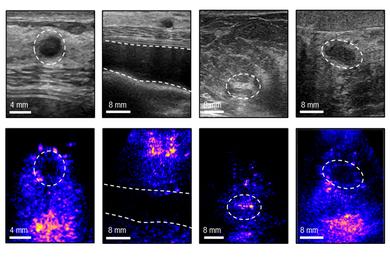
CAMBRIDGE, MASS.-- MIT professor emeritus Padmakar P.������������������Lele, a pioneer in the use of ultrasound to shrink tumors and measure heart damage, died on June 11 at the University of California-San Diego Medical Center after a long illness. Dr.������������������Lele, a native of India, was 71 years old.
Dr.������������������Lele came to������������������the United States in 1958 after receiving the BS and MD from the University of Bombay and the PhD from Oxford University. He was affiliated with Massachusetts General Hospital before joining the MIT-Harvard Health, Science and Technology������������������program and the Department of Mechanical Engineering in 1969 as a professor of experimental medicine. In addition to his research, Dr. Lele developed graduate courses in physics, technology, medical and industrial applications of ultrasound and microwaves.
He was a member of the board of governors of the American Institute of Ultrasound in Medicine (AIUM) and a fellow in the Acoustical Society of America. He was also a founding member of the American Hyperthermia Group and a charter member of the Bio-Electromagnetics Society. He served on the board of directors of the American Society for Clinical Hyperthermic Oncology and the European Society for Hyperthermic Oncology.
Dr.������������������Lele was awarded the AIUM Joseph H. Holmes Pioneer Award in 1988. Upon retiring from MIT, he and his wife, Carla, moved to La Jolla, CA, and traveled extensively. Before Dr.������������������Lele retired, they were longtime residents of Winchester, MA.
Besides his widow, Dr. Lele is survived by two sons, Martin and Malcolm of Westford, MA, and three brothers and a sister in India. Private services were held in San Diego and his remains were scattered at sea.