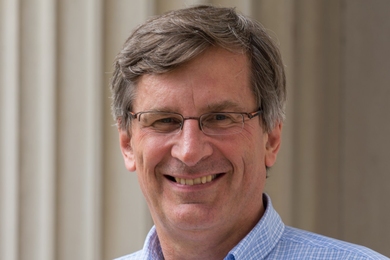
Professor Daniel E. Hastings an international expert on plasma physics, space power and space propulsion, has been appointed associate department head for research, Professor Earll M. Murman, head of the Department of Aeronautics and Astronautics, has announced.
"The Department of Aeronautics and Astronautics is a sizable research enterprise, presently the second largest unit within the School of Engineering," Professor Murman said. "It has an annual volume of $8 million to $10 million per year in funded projects with over 200 faculty, students, and staff participants organized into 10 laboratories and a grouping of individual projects.
"Individual principal investigators, primarily faculty members, are invested with the responsibility for conceiving, proposing, executing and managing this research. Nevertheless, leadership is needed to enhance, stimulate, facilitate, and administrate the department research enterprise. These leadership duties will be the responsibility of the associate department head for research."
Professor Hastings, a recognized authority on spacecraft-environment interactions, received his BA from Oxford University (1976) and his SM (1978) and PhD (1980) from MIT.
After working at Physical Sciences, Inc., and Oak Ridge National Laboratory, he joined the MIT faculty in 1985 and was promoted to full professor this year. He has served as director of the Massachusetts Space Grant Program, director of the Departmental Space Power and Propulsion Laboratory, and is presently director of the Computational Aerospace Sciences Laboratory in aeronautics and astronautics.
A version of this article appeared in the May 5, 1993 issue of MIT Tech Talk (Volume 37, Number 31).