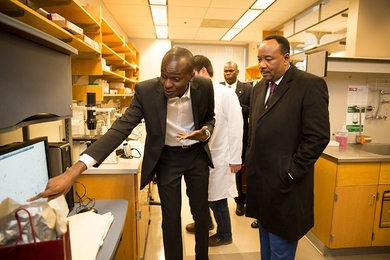
President Mahamadou Issoufou of Niger visits MIT biophysics lab
African leader tours the lab of Ibrahim Cissé, an assistant professor of physics.
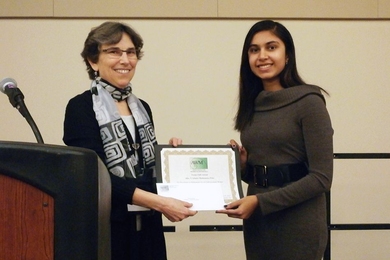
Falling in love with numbers at MIT
Sheela Devadas '15, winner of the 2015 Alice T. Schafer Prize for Excellence in Mathematics, fell in love with the subject at MIT — while still in high school.
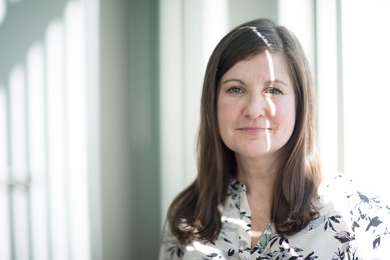
From the heart
Laurie Boyer’s studies of stem cell differentiation could improve treatments for heart disease.
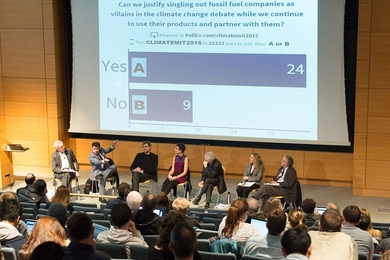
Communicating climate change: Focus on solutions
MIT discussion highlights causes for optimism and the importance of emphasizing positive steps.
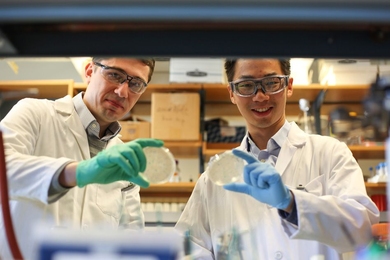
New evidence for how a rare form of liver cancer arises
MIT team finds mechanism by which exposure to vinyl chloride may produce cancerous mutations.
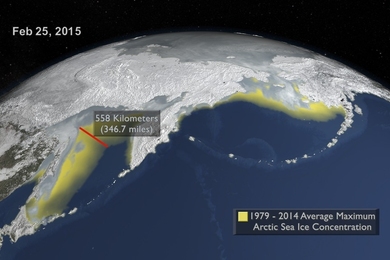
Closing the arctic data gap
Ice-tethered devices are helping researchers collect more data on the Arctic Ocean.
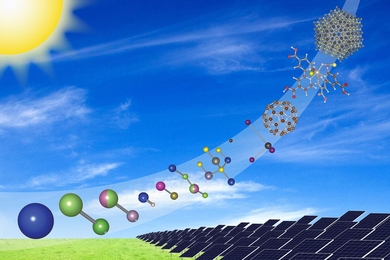
Analysis sees many promising pathways for solar photovoltaic power
New study identifies the promise and challenges facing large-scale deployment of solar photovoltaics.
Chisholm sees big impacts from small sources
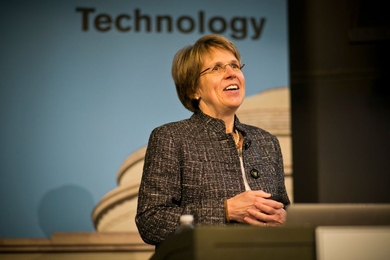
Discoverer of world’s most abundant and prolific photosynthetic organism delivers annual Killian Lecture.
Materials Processing Center marks 35 years
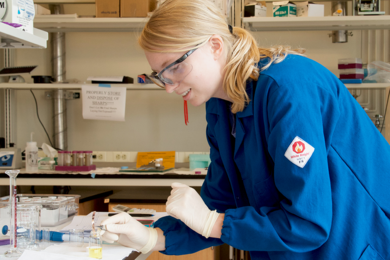
Service to faculty, collaboration with industry are hallmarks of campus-based Materials Processing Center at MIT.

The rise and fall of cognitive skills
Neuroscientists find that different parts of the brain work best at different ages.
New detector sniffs out origins of methane
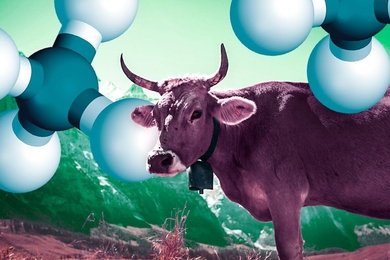
Instrument identifies methane’s origins in mines, deep-sea vents, and cows.
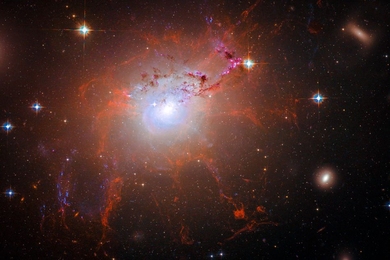
Why isn’t the universe as bright as it should be?
Study explains why galaxies don’t churn out as many stars as they should.
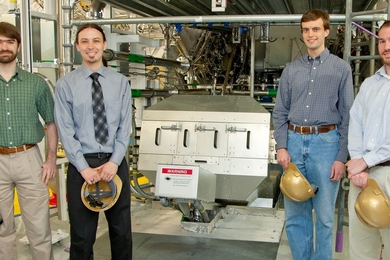
MIT graduate students receive prestigious Lawrence award
Award acknowledges important contributions to inertial confinement research.