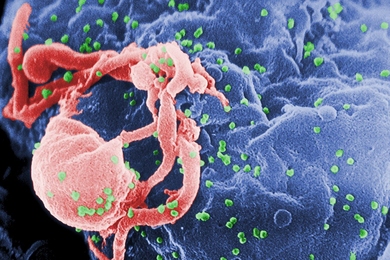
HIV genome bends over backwards to help virus take over cells
Differently shaped RNA molecules allow HIV to express different genes from the same RNA sequence.
Differently shaped RNA molecules allow HIV to express different genes from the same RNA sequence.
Chemical engineer aims to create a test that can work in 10 minutes and doesn’t require specialized instruments or laboratory infrastructure.
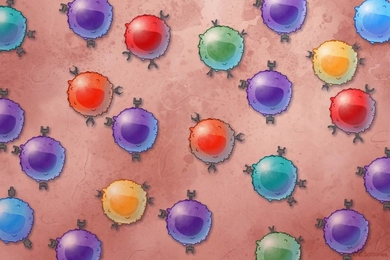
Researchers develop a method to isolate and sequence the RNA of T cells that react to a specific target.
Whitehead Institute member and assistant professor of biology receives one of the most prestigious non-governmental awards for early-career scientists.
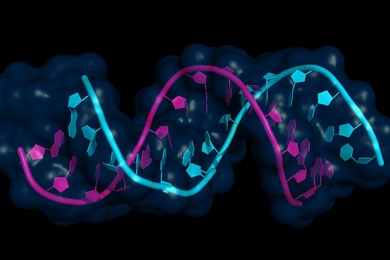
Vaccines packaged in novel nanoparticles could offer a new way to fight cancer and infectious diseases.

Whitehead Institute scientists find chemical modification contributes to trafficking between non-membrane-bound compartments that control gene expression.
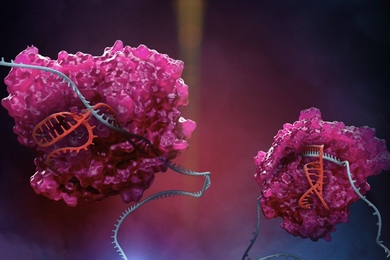
The new system, dubbed RESCUE, allows RNA edits to be made that were not previously possible.
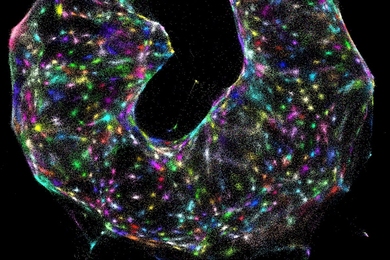
Researchers develop a new microscopy system for creating maps of cells, using chemical reactions to encode spatial information.
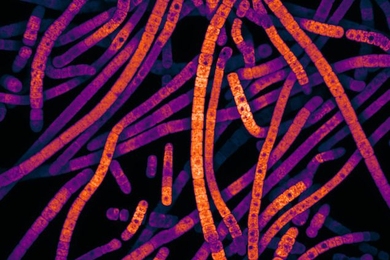
Researchers identify and develop new CRISPR-associated transposase system for targeted integration of DNA, adding key capabilities to gene-editing technology.
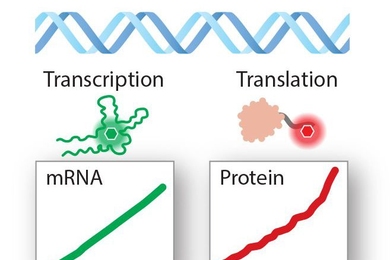
Fluorescent tagging system can expedite the process of designing genes and personalizing medicine.

Study finds shallow bodies of water were probably more suitable for Earth’s first life forms.
Professor Gerald Fink, a pioneer in the field of genetics, delivers the annual Killian Lecture.
Rights are protected for broad use in developing world and for public health needs.
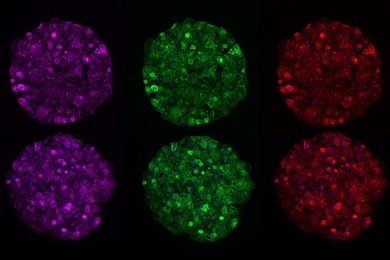
Studies could speed the development of new treatments for liver disease.
CRISPR team harnesses new Cas12b enzyme for use in eukaryotic cells, adding to the CRISPR toolbox.