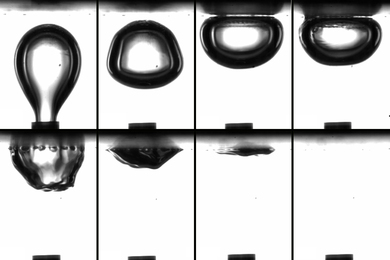
Tackling industry’s burdensome bubble problem
MIT researchers uncovered the physics behind bubble-removing membranes that could improve bioreactors, chemical production, and more.
MIT researchers uncovered the physics behind bubble-removing membranes that could improve bioreactors, chemical production, and more.
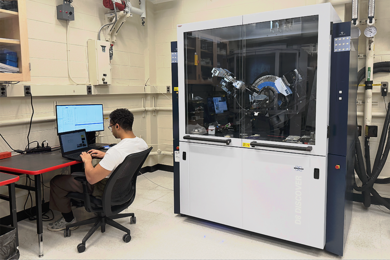
The X-ray diffraction and imaging facility at MIT.nano adds a new tool to support research in a wide variety of disciplines.
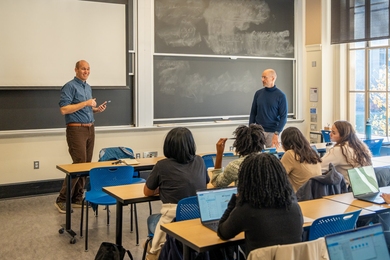
In STS.059 (The Bioeconomy and Society), students explore the social and political factors at work in the biology, biotech, and biological engineering sectors.
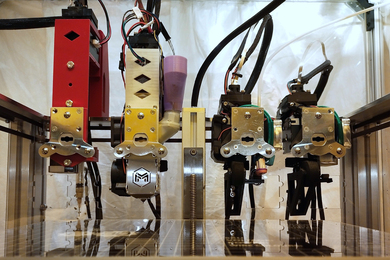
Overcoming challenges of 3D printing with multiple functional materials, MIT researchers fabricated an electric linear motor in hours.
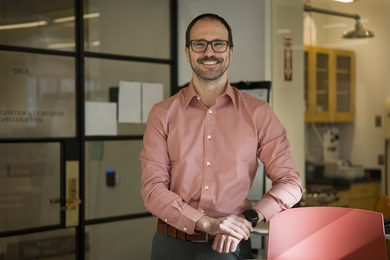
Associate Professor Rafael Gómez-Bombarelli has spent his career applying AI to improve scientific discovery. Now he believes we are at an inflection point.
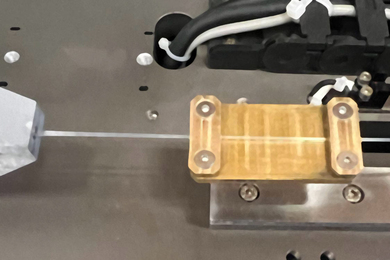
The flexible material could enable on-demand heat dissipation for electronics, fabrics, and buildings.

Professor of the practice Carlo Ratti designed this year’s Olympic torch with the ethos and principles he brings to his work at MIT.
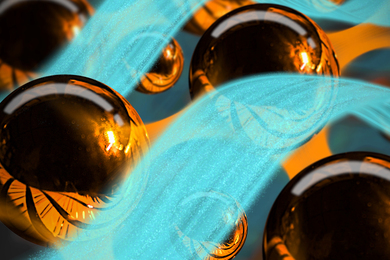
For the first time, the new scope allowed physicists to observe terahertz “jiggles” in a superconducting fluid.
MIT researchers’ DiffSyn model offers recipes for synthesizing new materials, enabling faster experimentation and a shorter journey from hypothesis to use.
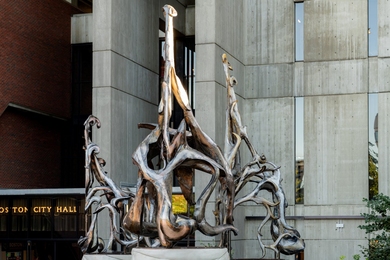
The MIT lecturer and artist-in-residence transformed hundreds of inscribed and hammered steel plates into “Amulet,” a soaring public artwork at City Hall Plaza.
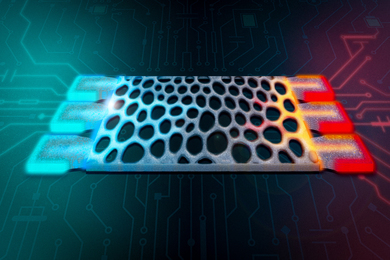
By leveraging excess heat instead of electricity, microscopic silicon structures could enable more energy-efficient thermal sensing and signal processing.
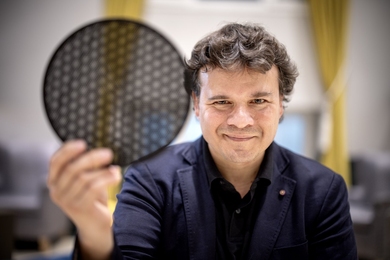
MIT physicist shares 400,000-euro award for influential work on “magic-angle” graphene.
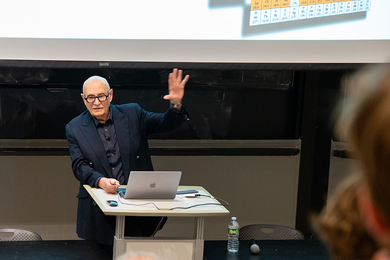
At MIT, metallurgist Diran Apelian ScD ’73 urges engineers and researchers to rethink design, recycling, and the life cycle of modern materials.
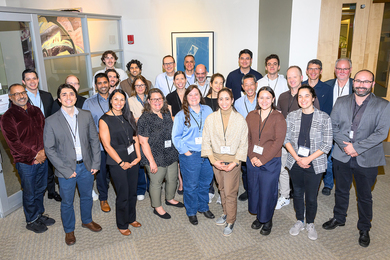
The consortium convenes industry, academia, and policy leaders to navigate competing demands and reimagine materials supply.
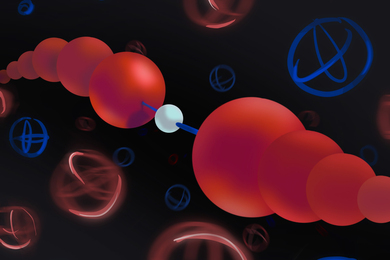
MIT researchers found a way to predict how efficiently materials can transport protons in clean energy devices and other advanced technologies.