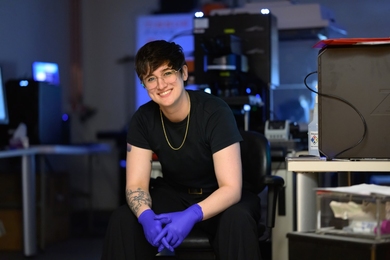
Tackling rare genetic disorders with patient-focused science
Shannon Knight, a brain and cognitive sciences PhD candidate and McGovern Institute researcher, focuses on developing a novel gene therapy.
Shannon Knight, a brain and cognitive sciences PhD candidate and McGovern Institute researcher, focuses on developing a novel gene therapy.

In certain species of bacteria, the answer lies in shielding RNA transcripts from a quality-control factor called Rho. Understanding the requirements for expressible sequences is critical for expression engineering of therapeutic agents.
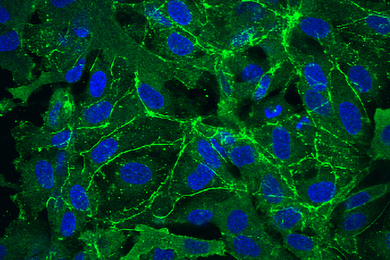
By showing the problem derives from genetic mutations that lead to overexpression of a microRNA, MIT researchers’ study points to potential treatment.

MIT researchers have dramatically lowered the error rate of prime editing, a technique that holds potential for treating many genetic disorders.

Researchers develop a fast-acting, cell-permeable protein system to control CRISPR-Cas9, reducing off-target effects and advancing gene therapy.

Researchers redesign a compact RNA-guided enzyme from bacteria, making it an efficient editor of human DNA.
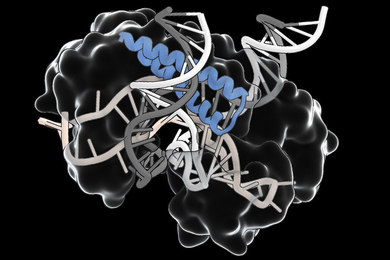
The programmable proteins are compact, modular, and can be directed to modify DNA in human cells.

Colleagues remember the longtime MIT professor as a supportive, energetic collaborator who seemed to know everyone at the Institute.

By sidestepping the need for costly interventions, a new method could potentially reveal gene regulatory programs, paving the way for targeted treatments.

By analyzing bacterial data, researchers have discovered thousands of rare new CRISPR systems that have a range of functions and could enable gene editing, diagnostics, and more.

New research finds RNA-guided enzymes called Fanzors are widespread among eukaryotic organisms.

By focusing on causal relationships in genome regulation, a new AI method could help scientists identify new immunotherapy techniques or regenerative therapies.
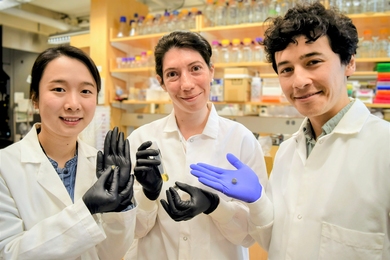
Coupling engineered bacteria with low-power electronics could be highly effective in diagnosis, treatment of bowel diseases.
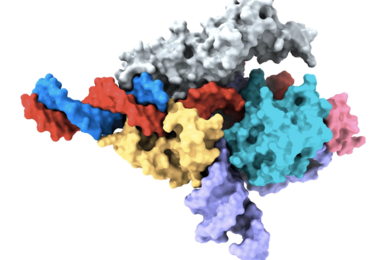
The first RNA-guided DNA-cutting enzyme found in eukaryotes, Fanzor could one day be harnessed to edit DNA more precisely than CRISPR/Cas systems.
Synthetic biology expert to succeed Angela Belcher as department head effective Aug. 1.