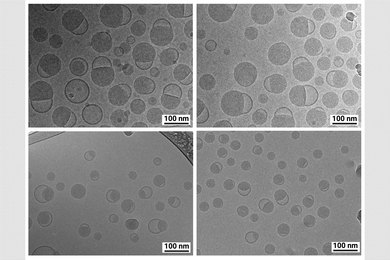
A new technique could accelerate the development of RNA therapies
MIT chemical engineers found a way to rapidly produce lipid nanoparticles of varying sizes, which could make it easier to develop new vaccines and therapeutics.
MIT chemical engineers found a way to rapidly produce lipid nanoparticles of varying sizes, which could make it easier to develop new vaccines and therapeutics.
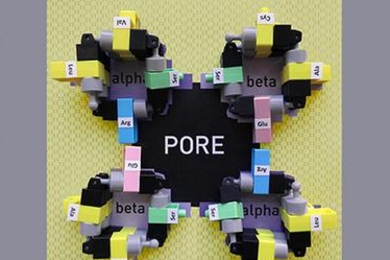
Using a modular kit, the MIT Edgerton Center is bringing a hands-on biology curriculum to Massachusetts’ second-largest school district.
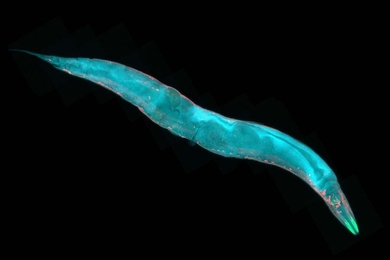
A study of worms finds a protein that helps shape the structure of the genome is critical for establishing the identity of some neurons.
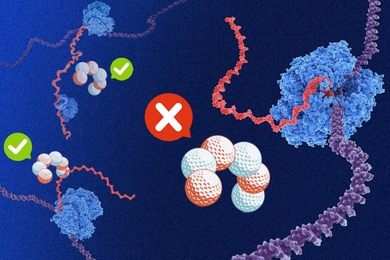
In certain species of bacteria, the answer lies in shielding RNA transcripts from a quality-control factor called Rho. Understanding the requirements for expressible sequences is critical for expression engineering of therapeutic agents.
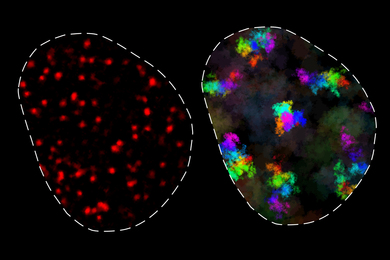
By monitoring these chromosomal structures over many timescales, MIT researchers found that chromatin helps bring genes closer to their regulatory elements.
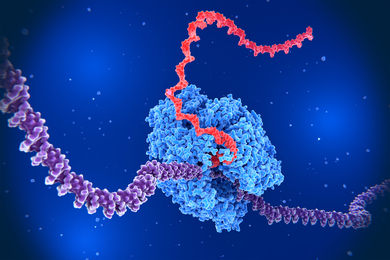
When genes are transcribed, they suppress or activate their neighbors, coupling expression between the two genes.

A new study suggests that the chemical NDMA is much more likely to cause cancerous mutations after exposure early in life.
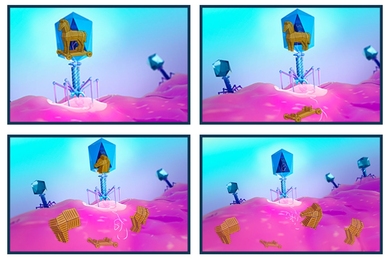
SNIPE, a newly characterized biological defense system, directly protects bacteria by chopping up invading viral DNA.
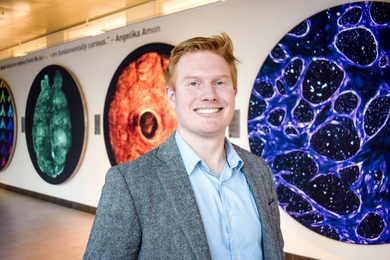
Assistant Professor Matthew Jones is working to decode molecular processes on the genetic, epigenetic, and microenvironment levels to anticipate how and when tumors evolve to resist treatment.
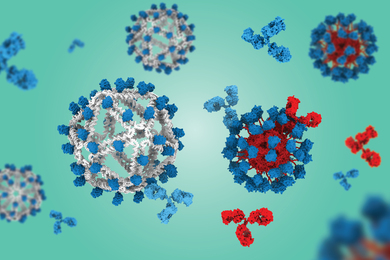
Based on a virus-like particle built with a DNA scaffold, the approach could generate broadly neutralizing antibody responses against HIV or influenza.
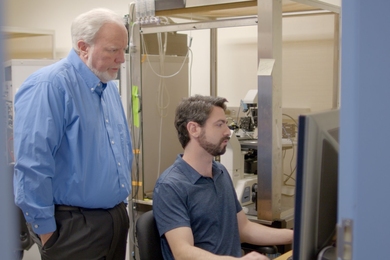
Tracking how fruit fly motor neurons edit their RNA, neurobiologists cataloged hundreds of target sites and varying editing rates, finding many edits altered communication- and function-related proteins.
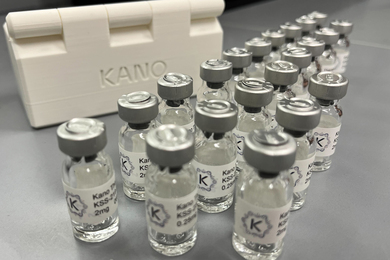
With its circular single-stranded DNA molecules, MIT spinout Kano Therapeutics plans to make gene and cell therapies safer and more effective.

New findings may help researchers identify genetic mutations that contribute to rare diseases, by studying when and how single genes produce multiple versions of proteins.

The KATMAP model, developed by researchers in the Department of Biology, can predict alternative cell splicing, which allows cells to create endless diversity from the same sets of genetic blueprints.
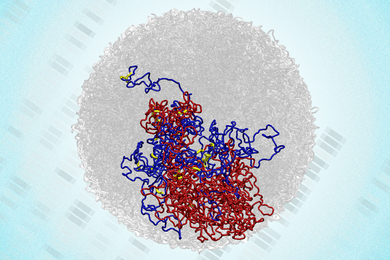
Enabled by a new high-resolution mapping technique, the findings overturn a long-held belief that the genome loses its 3D structure when cells divide.