
Department
Materials Science and Engineering
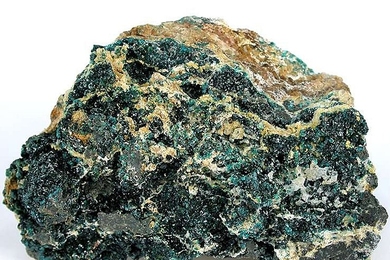
Understanding a new kind of magnetism
Researchers use low-frequency laser pulses to probe the properties of a kind of fluctuating magnetism known as a spin-liquid state.
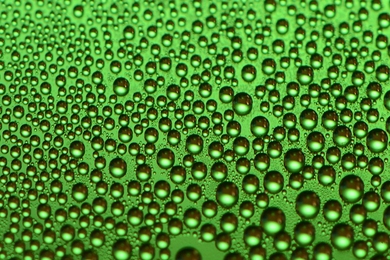
Water-shedding surfaces can be made to last
New approach to hydrophobic material could benefit power plants, cooling systems.
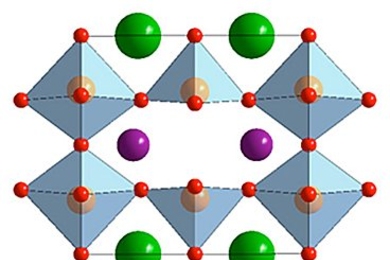
New materials improve oxygen catalysis
Highly active catalysts could be key to improved energy storage in fuel cells and advanced batteries.
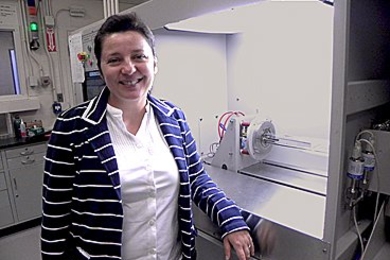
Developing nanowires for solar cells
Profiling Silvija Gradečak, the Thomas Lord Associate Professor in Materials Science and Engineering

Catalyzing the next generation of batteries
Professor Yang Shao-Horn works at the cutting edge of basic energy science research

A pea-shooter for molecules
Researchers find that tiny molecules passing through nanotubes can be propelled or slowed depending on their size.

U.S. News ranks MIT seventh overall among U.S. universities
Institute’s undergraduate engineering program is again ranked No. 1; undergraduate business program is No. 2.
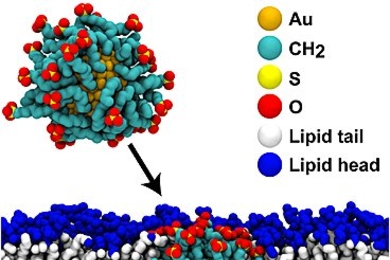
The gold standard for cell penetration
Gold nanoparticles with special coatings can deliver drugs or biosensors to a cell’s interior without damaging it.

Tuning metal-oxygen bond strength
Controlling spin state through strain could lead to better cathodes for solid oxide fuel cells

In it for the long run
When Millie Dresselhaus won the prestigious Kavli Award last year, she put her money where her career has been.

Improved nuclear fuel-rod cladding might prevent future Fukushimas
A substitute for traditional zircaloy could greatly reduce the danger of hydrogen explosions.
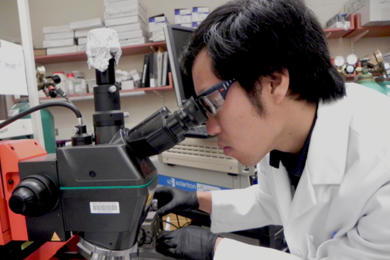


Finding the keys to boiling heat transfer
Understanding the properties that control surface dissipation of heat could lead to improved power plants and electronics with high heat-transfer rates.