
Computational tools for society’s most complex challenges
Associate Professor Cathy Wu uses reinforcement learning to help map out improvements to transportation and other multifaceted systems.
Associate Professor Cathy Wu uses reinforcement learning to help map out improvements to transportation and other multifaceted systems.
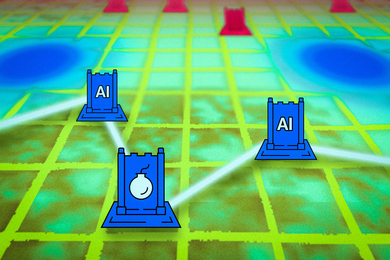
Able to defeat top-ranked human players and more efficient than other models, the new system could help decision-makers in military maneuvers or business negotiations.

In a study focusing on hiring decisions, MIT researchers found the use of a single algorithm by many firms could benefit job seekers in certain situations.

The “HardFlow” algorithm could help generative AI models produce high-quality outputs that obey strict requirements when “pretty close” doesn’t cut it.

The new framework could streamline the design process of robotic grippers or aerospace components that exhibit complex behaviors found in nature.

Study finds non-experts deferred to LLM-based diagnostic assistance, even when it was wrong, while clinicians caught AI errors.

An expert in machine learning, statistics, and computation, Rakhlin succeeds Professor Ankur Moitra.
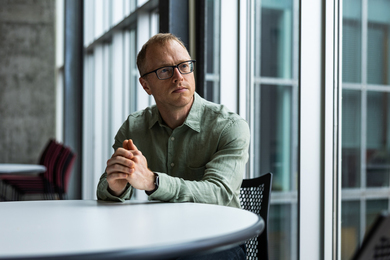
Philosopher Brian Hedden studies decision-making over time — and recently chose to return to alma mater MIT, where he is now connecting ethics and computing.
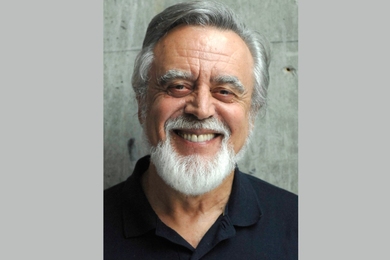
Known for his clear and elegant writing style, Bertsekas shaped fields from control and optimization to large-scale computation and artificial intelligence.
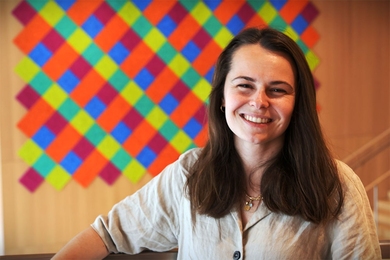
Assistant Professor Bailey Flanigan has arrived at complex computational methods for helping democracy thrive.
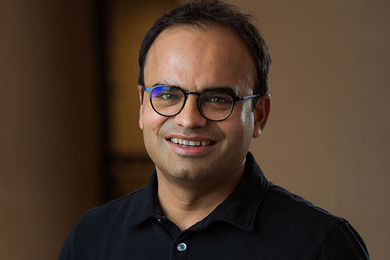
Through research and entrepreneurship, Professor Devavrat Shah is helping to design methods that can handle constant decision-making using limited computational resources.

Researchers developed an auditing technique to test generative AI models for malicious capabilities, without prompting them for illegal outputs.
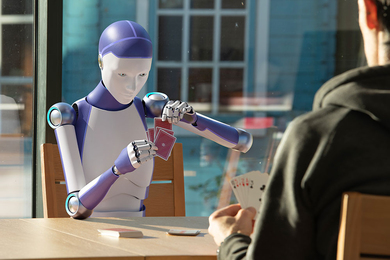
Researchers show that for certain kinds of games, an overlooked class of algorithms performs much better than expected.
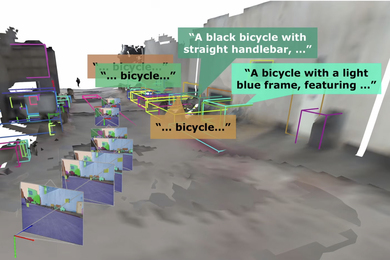
A new spatial memory system for robots efficiently captures details about the objects they see while exploring their environment.
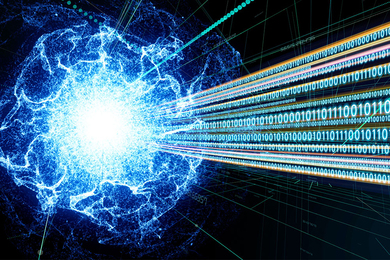
Researchers establish key insights for reading and writing information for quantum sensing, communication, computing, and control.