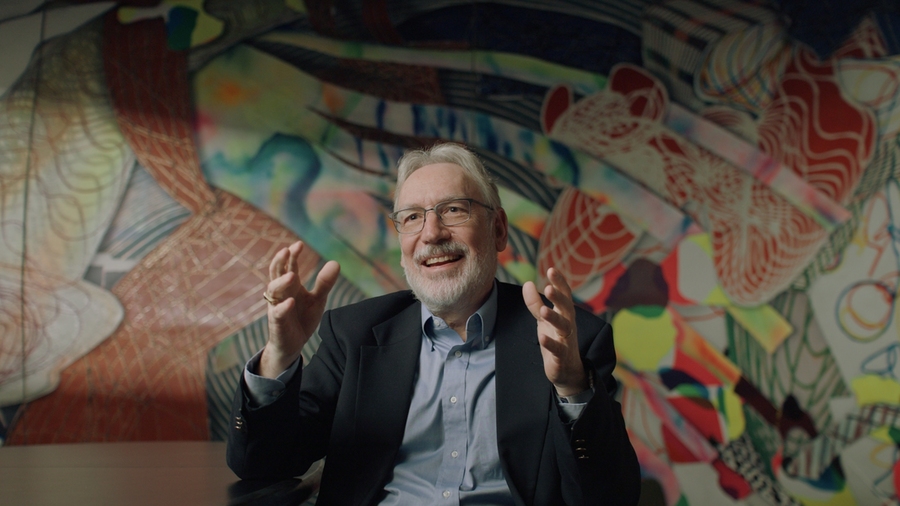
Vice Provost for International Activities Duane Boning oversees MIT’s international policies and engagements. Here he discusses why international engagement remains vital to MIT’s mission of advancing knowledge, educating students, and innovating to serve the nation and the world.
Q: Why does MIT consider international engagement important to its institutional mission?
A: International engagement is an integral part of what makes MIT strong. It allows us to collaborate with excellent partners, access facilities and research environments unavailable at home, monitor and learn from worldwide progress, and remain closely connected to the world of ideas and innovation.
MIT’s mission is to advance knowledge, educate students, and develop innovations that serve the nation and the world. To do those things well, we have to understand — and help shape — the global landscape of science and technology.
Today’s breakthroughs don’t emerge in isolation. Scientific talent, research facilities, and technological advances are distributed across the world. To ensure that we remain at the forefront of discovery and innovation, we need to know what is happening beyond our borders, collaborate where it serves our mission, and prepare our students to compete in a changing world.
That does not mean engagement without limits. We are open to international collaboration and global talent paired with sensible, risk-based safeguards. We welcome international collaboration where it advances our educational and research mission, while applying rigorous safeguards to protect sensitive research, intellectual property, and national security.
The world is already deeply interconnected, and we believe that thoughtful engagement makes us stronger.
Q: How does engaging this way benefit MIT and the nation?
A: International collaboration is central to keeping MIT and our graduates at the forefront of knowledge and innovation in the 21st century.
Collaboration is vital to attracting, retaining, and educating the leaders of tomorrow — students, faculty, and researchers from both the United States and around the world — and to feeding MIT's innovative and entrepreneurial spirit.
Frankly, throughout its history, MIT has flourished in part because of its capacity to attract the world’s very best students, faculty, and researchers — many of whom remain permanent contributors in the United States. These individuals have gone on to teach, deliver breakthroughs, and create American startups.
International partnerships also give MIT researchers access to things that aren’t readily accessible in the United States. For example, MIT researchers working in Singapore were able to test autonomous vehicle technologies years before suitable facilities were widely available domestically. Off the coast of Portugal, MIT researchers are now partnering to develop the next generation of deep-ocean monitoring systems in offshore environments that don’t exist here. The knowledge and insights gained in such settings benefit everything we do.
Q: How is MIT adapting to a changing and more uncertain world?
A: Our mission to serve the nation and the world remains steadfast, but we acknowledge that the world has changed. MIT has rigorous processes for evaluating and mitigating potential risk associated with international engagements in a thoughtful and thorough way, allowing the Institute to engage appropriately in new opportunities when and where possible.
Global collaboration still plays an essential role in advancing research, education, and innovation. But we recognize the challenges of operating within a rapidly shifting environment marked by geopolitical uncertainty, evolving federal funding priorities, regulatory complexity, policy shifts limiting international mobility, and competition for global talent and collaborations.
On the research front, we seek to cultivate relationships across industry, government, and the global alumni community. On education and student experience, we recognize that the United States benefits when American students understand the world around them. It expands opportunities for both undergraduate and graduate students to gain international experience while strengthening relationships with trusted partners and maintaining the flexibility to adapt as global conditions change.
While MIT’s global engagement is partly built on long-standing relationships that have delivered meaningful outcomes for students and researchers, today’s volatile landscape calls for forward-thinking cultivation of new relationships around the world. By investing in new regions, MIT will be better positioned to adapt to changing global circumstances.
International engagement enables MIT to deepen its impact, strengthen innovation, and enable students and researchers to take part in tackling the world’s most pressing challenges.