Skip to content ↓

Mathematics Professor Bonnie Berger honored with ISCB Senior Scientist Award

The International Society for Computational Biology Senior Scientist Award recognizes highly significant, long-term career achievement.

Press Contact:

Sandi Miller
Phone: 617-258-6895
Departments of Physics and Mathematics
Close
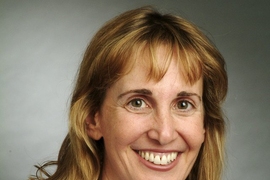
Bonnie Berger is being honored for her visionary, foundational, and deep contributions to the field of computational biology.
Caption:
Bonnie Berger is being honored for her visionary, foundational, and deep contributions to the field of computational biology.

Bonnie Berger, the Simons Professor of Mathematics at MIT, has been selected as the 2019 recipient of the International Society for Computational Biology Senior Scientist Award.

The annual award recognizes “highly significant, long-term career achievement,” in Berger’s case for visionary, foundational, and deep contributions to the field. ISCB is the premier society in computational biology and bioinformatics with 3,400 members. 

“It’s a tremendous honor to join such a distinguished and accomplished group of scientists,” said Berger, who holds a joint appointment in the Department of Electrical Engineering and Computer Science.

“Dr. Berger made fundamental contributions in diverse areas of bioinformatics, starting from important contributions in protein structure prediction in 1990s to founding the area of compressive genomics a few years ago,” said her nominator, Pavel Pevzner, a professor of computer science and engineering at the University of California at San Diego. “Her work combines algorithmic depth, biological relevance, practical utility, and broad applicability.” 

Berger will receive the award and give the Senior Scientist keynote at the ISMB/ECCB 2019 meeting this July in Basel, Switzerland.

Berger was also named an ISCB Fellow in 2012.

Related Links

Related Topics

Related Articles

More MIT News

Globular blue and white orbs "examining" single-stranded RNA products and marking them with green checks or red x's

Why are some bacterial genes high in purines?

In certain species of bacteria, the answer lies in shielding RNA transcripts from a quality-control factor called Rho. Understanding the requirements for expressible sequences is critical for expression engineering of therapeutic agents.

Read full story

Rich Nielsen, Volha Charnysh, Kevin Dorst, and Emily Richmond Pollock seated at a table, talking

Building a scholarly community

The SHASS Faculty Fellows Program, administered by the MIT Human Insight Collaborative, is fostering new research projects and creating space for supportive and interdisciplinary discussion.

Read full story