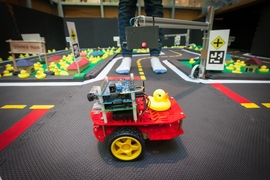
In a new collaborative initiative in autonomy and robotics, MIT and Lockheed Martin scientists will focus on innovations needed to enable generation-after-next autonomous systems. Improvements in human/machine teaming and navigation in complex environments are among the research challenges that Lockheed Martin is inviting MIT faculty and their students to help solve.
“We have a valued relationship with MIT and are looking forward to moving to this next chapter and partnering with world-class researchers,” said Keoki Jackson '89, SM '92, ScD '97, Lockheed Martin's chief technology officer. “We are focused on advancing technology and recruiting top talent, both of which are crucial for creating the next generation of aerospace systems.”
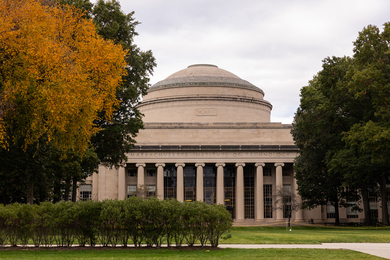
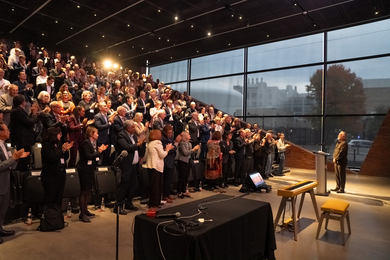
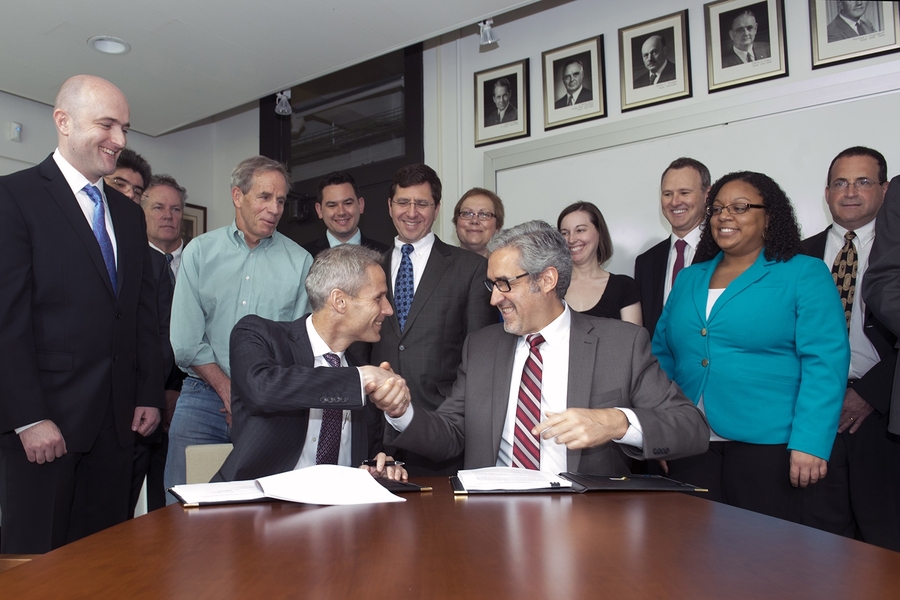
A master agreement between MIT and Lockheed Martin, led by the Institute’s Department of Aeronautics and Astronautics (AeroAstro), and in collaboration with MIT’s Computer Science and Artificial Intelligence Laboratory, was formalized May 13 at a signing ceremony on campus. It provides a multiyear framework between MIT and Lockheed Martin for collaborative research, exchange of visiting scientists, support of student undergraduate research opportunities, fellowships, and internships at Lockheed Martin.
“We’re making the investment today, not just in research and development of the technologies that could have the most impact on future generations, but in the talent of these amazing individuals that will truly shape the future,” said Padraig Moloney '00, Lockheed Martin program manager and architect of the new initiative. “We’re confident that our relationship and collaboration in these technical areas will influence the fields of autonomy and robotics for the next 15-20 years.”
AeroAstro department head Jaime Peraire said, “We’re delighted with this new agreement, which furthers a relationship between MIT AeroAstro and Lockheed Martin that goes back many years. It formalizes our partnership, and aligns with MIT’s mode of conducting research and education by melding academic rigor with real engineering challenges and applications.”
Initial research will be conducted by AeroAstro professors Jonathan How, Nick Roy, Sertac Karaman, Julie Shah, and Russ Tedrake and Department of Mechanical Engineering Professor Sangbae Kim.