Last month, MIT’s Rewards and Recognition Program received three Best Practice Standard Awards from Recognition Professionals International. Recognition Professionals International is the only non-profit professional association that focuses on recognition innovations and education to enhance the workplace and promote organizational excellence.
MIT received awards for communications, recognition training, and program flexibility. The Cleveland Clinic and Southwest Airlines were also recognized.
Cori Champagne, MIT’s Rewards and Recognition Program administrator, traveled to Las Vegas in January to receive the honor. “From the start, MIT understood that recognition needs to be accessible to staff in diverse settings, and in diverse roles at the Institute.” she said. “We want everyone at MIT to feel that they have a role in recognizing the great work they see taking place.”
Through the Rewards and Recognition Program, MIT provides three different opportunities for acknowledging co-workers and peers. The Appreciation and Infinite Mile Award programs are run locally through the work of "key contacts" — the individuals responsible for creating and maintaining rewards-related programs and activities within their areas at MIT. The Excellence Awards are Institute-wide, and the highest honor given to individuals and groups at MIT. In 2014, the Collier Medal was created to honor the memory of Officer Sean Collier, and is presented at the ceremony as well.
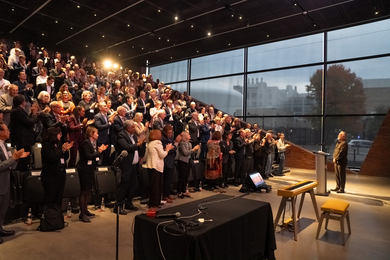
The Excellence Awards and Collier Medal ceremony will take place on Wednesday, March 11, at 3 p.m. in Kresge Auditorium, with a reception to follow.