Skip to content ↓

Harvesting fresh water from fog

Professor Gareth McKinley co-leads research to optimize fog harvesting technology.
Watch Video

Press Contact:

Alissa Mallinson
Phone: 617-258-7511
Department of Mechanical Engineering
Close
Screenshot from the video, "Harvesting Fresh Water from Fog"
Caption:
Screenshot from the video, "Harvesting Fresh Water from Fog"

Researchers at MIT's School of Engineering, working with colleagues at the Pontificial University of Chile in Santiago, are harvesting potable water from the coastal fog that forms on the edge of one of the driest regions on Earth. 

Using a simple system of suspended mesh structures, placed on hilltops in areas with persistent fog and prevailing westerly winds, local Chilean communities collect fog water for drinking and agricultural use.

Fog-collecting technology is still in its infancy. But lab experiments have shown that variations in the mesh spacing, as well as the size and the wettability of the mesh fibers, all affect the volume of water that can be collected each day. Through engineering analysis and optimization of the mesh geometry and its surface chemistry, the team — which includes MIT professor of mechanical engineering Gareth McKinley and MIT professor of chemical engineering Robert Cohen — has been able to increase the fog-collecting efficiency of existing designs by 500 percent. 

The technology holds great promise as a locally deployable and scalable alternative to other energy-intensive desalination technologies. Mesh-based fog harvesters are passive, inexpensive to fabricate, with almost no operating costs, and can be deployed in similar environments throughout the world.
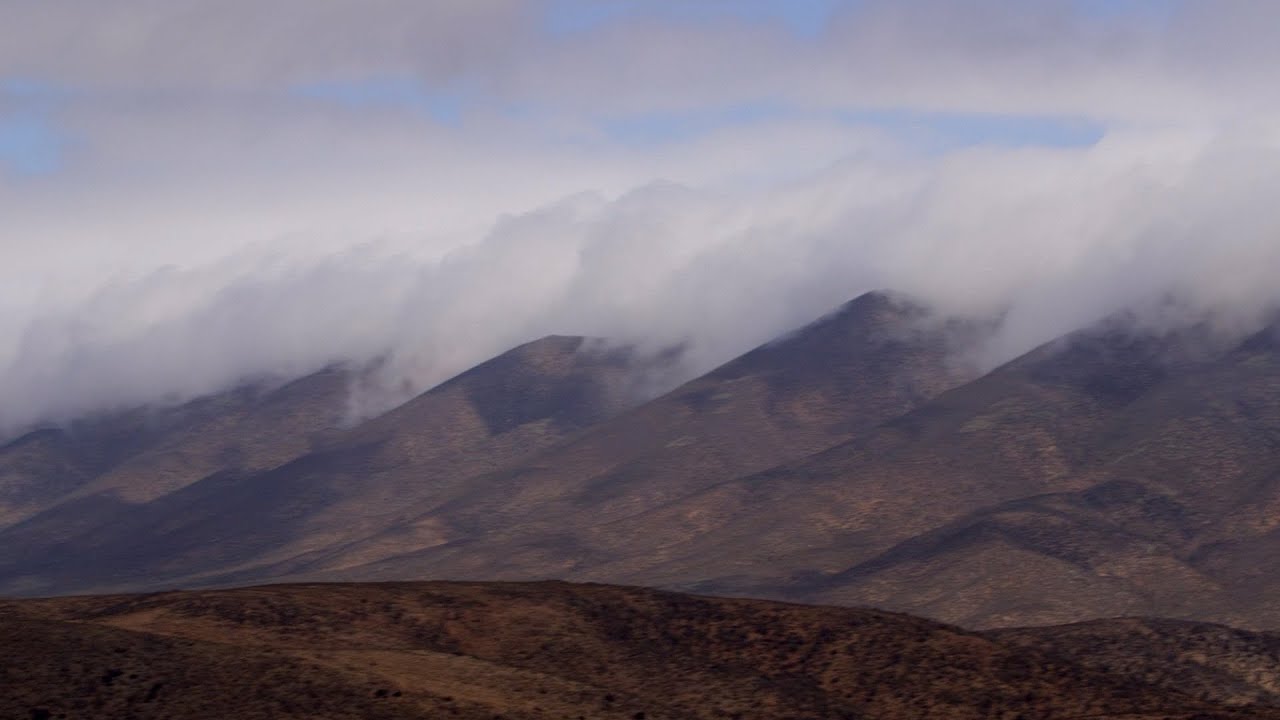
Video thumbnail Play video
Researchers at MIT's School of Engineering, working with colleagues at the Pontificial University of Chile in Santiago, are harvesting potable water from the coastal fog that forms on the edge of one of the driest regions on Earth.

Press Mentions

Boston Globe

In a piece for The Boston Globe, Kevin Hartnett writes that MIT researchers have developed a new technique for transforming fog into drinking water. 

Related Links

Related Topics

Related Articles

More MIT News

Globular blue and white orbs "examining" single-stranded RNA products and marking them with green checks or red x's

Why are some bacterial genes high in purines?

In certain species of bacteria, the answer lies in shielding RNA transcripts from a quality-control factor called Rho. Understanding the requirements for expressible sequences is critical for expression engineering of therapeutic agents.

Read full story

Rich Nielsen, Volha Charnysh, Kevin Dorst, and Emily Richmond Pollock seated at a table, talking

Building a scholarly community

The SHASS Faculty Fellows Program, administered by the MIT Human Insight Collaborative, is fostering new research projects and creating space for supportive and interdisciplinary discussion.

Read full story