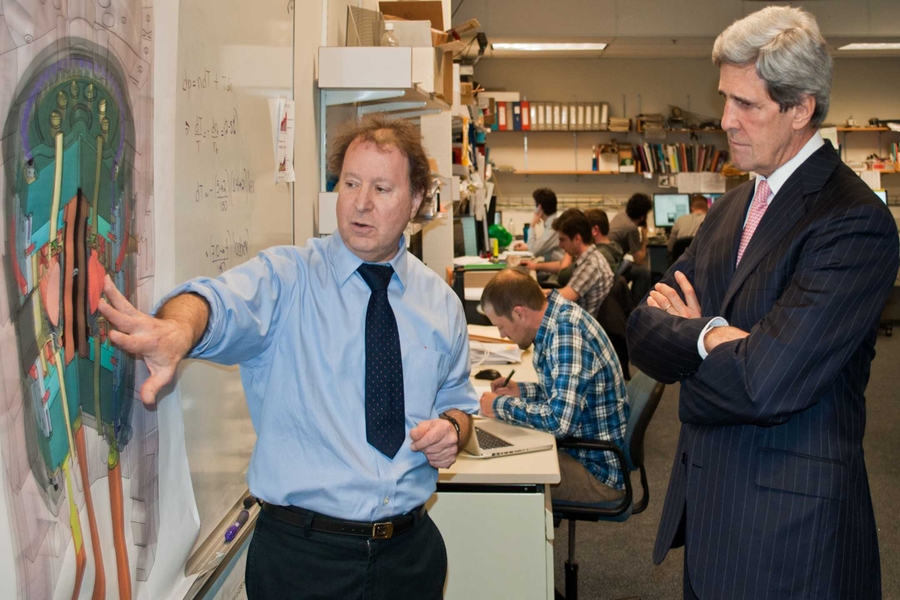
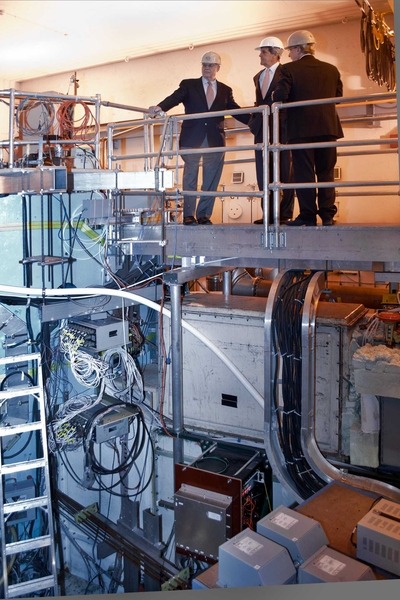
U.S. Sen. John Kerry (D-Mass.) visited MIT’s Plasma Science and Fusion Center (PSFC) on March 19 to tour the Alcator C-Mod tokamak and see first-hand how the experiment operates. The C-Mod fusion project is at risk of being terminated due to proposed cuts in the domestic fusion program in the fiscal year 2013 presidential budget. Kerry has already been working to restore the project’s funding, writing a letter to the Senate Appropriations Committee strongly arguing against cuts to domestic fusion research.
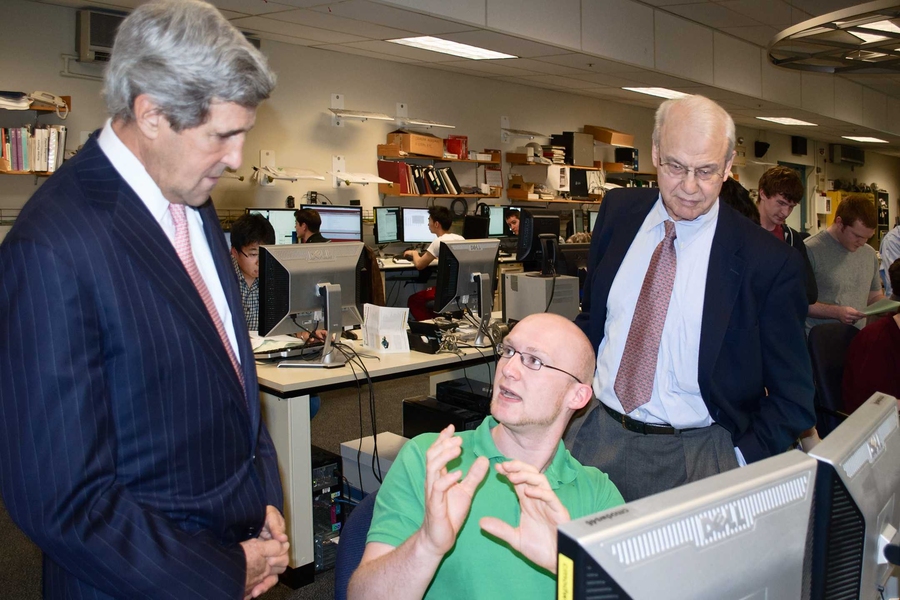
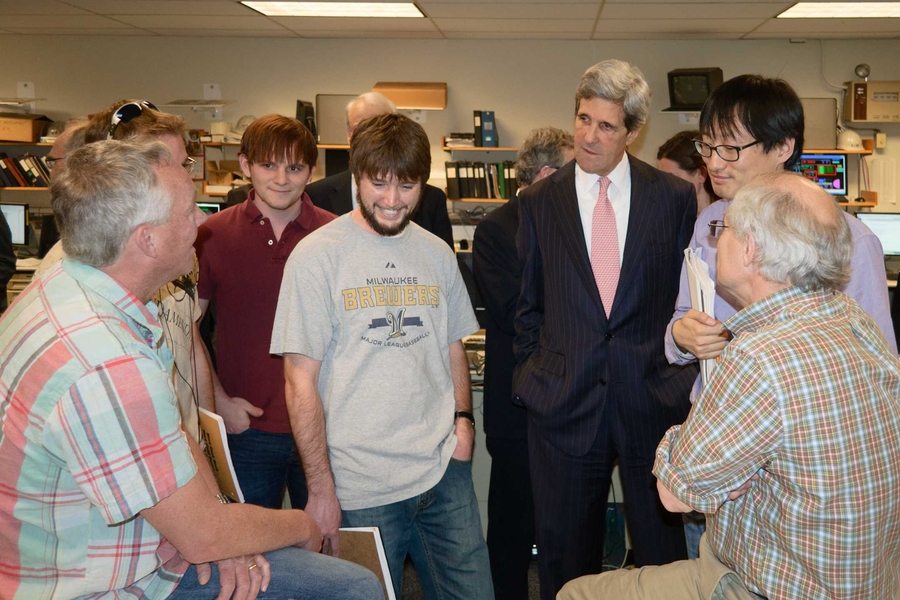
Hosted by PSFC Director Miklos Porkolab, Alcator Division Head Earl Marmar and Associate Director Martin Greenwald, Kerry toured the C-Mod Control Room and Cell. He spent time talking to a number of the PSFC's 30 graduate students, asking them about their research and their concerns. A cut in funding would seriously affect their future work at MIT, including their dissertations. Marmar argued, more broadly, that if the United States cannot train fusion researchers, the country will not be able to compete when fusion becomes a viable energy source.
Other public officials have recently shared Kerry’s interest in Alcator C-Mod, including Mass. Gov. Deval Patrick, U.S. Rep. Michael Capuano (D-Mass.) and U.S. Rep. Jay Inslee (D-Wash.), who visited on March 9 to learn more about fusion research at MIT.
Hosted by PSFC Director Miklos Porkolab, Alcator Division Head Earl Marmar and Associate Director Martin Greenwald, Kerry toured the C-Mod Control Room and Cell. He spent time talking to a number of the PSFC's 30 graduate students, asking them about their research and their concerns. A cut in funding would seriously affect their future work at MIT, including their dissertations. Marmar argued, more broadly, that if the United States cannot train fusion researchers, the country will not be able to compete when fusion becomes a viable energy source.
Other public officials have recently shared Kerry’s interest in Alcator C-Mod, including Mass. Gov. Deval Patrick, U.S. Rep. Michael Capuano (D-Mass.) and U.S. Rep. Jay Inslee (D-Wash.), who visited on March 9 to learn more about fusion research at MIT.