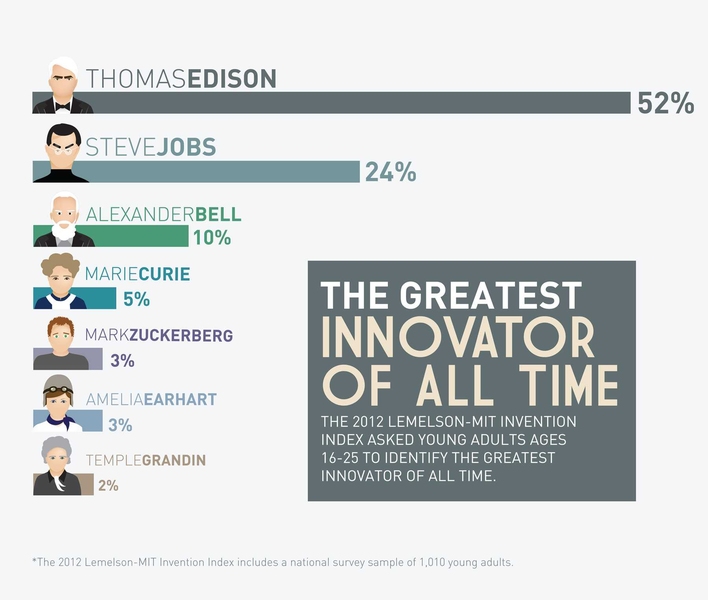
The 2012 Lemelson-MIT Invention Index, announced today, indicates that young Americans are acutely aware of the importance of invention and innovation in their personal lives, and within the context of the nation’s economy. Yet most feel there are factors that would prevent them from furthering education in or entering inventive fields, posing a threat to the pool of future U.S. innovators and the country’s economic prosperity.
The annual Lemelson-MIT Invention Index, which gauges Americans’ perceptions about invention and innovation, surveyed Americans ages 16 to 25. When asked about how new technology such as smartphones and tablets influences and impacts their personal lives, 40 percent of respondents said they couldn’t imagine their life without it. Americans also have a clear understanding of the role invention and innovation play in the health of the nation with nearly half (47 percent) saying that a lack of invention will hurt the U.S. economy.
Those surveyed, however, may not be the ones to take-on the challenge; 60 percent say there are factors that could keep them from pursuing an education or career in science, technology, engineering or math — fields that yield invention and lead to innovation.
To read the full press release, please visit http://web.mit.edu/invent/n-pressreleases/n-press-12index.html
The annual Lemelson-MIT Invention Index, which gauges Americans’ perceptions about invention and innovation, surveyed Americans ages 16 to 25. When asked about how new technology such as smartphones and tablets influences and impacts their personal lives, 40 percent of respondents said they couldn’t imagine their life without it. Americans also have a clear understanding of the role invention and innovation play in the health of the nation with nearly half (47 percent) saying that a lack of invention will hurt the U.S. economy.
Those surveyed, however, may not be the ones to take-on the challenge; 60 percent say there are factors that could keep them from pursuing an education or career in science, technology, engineering or math — fields that yield invention and lead to innovation.
To read the full press release, please visit http://web.mit.edu/invent/n-pressreleases/n-press-12index.html