Materials are one of the key enablers in any engineering project. Bridge builders, who once worked in stone, and then in steel, can now draw on carbon fiber, polymers and composites with outstanding strength, weight and other characteristics that extend the engineer’s capabilities.
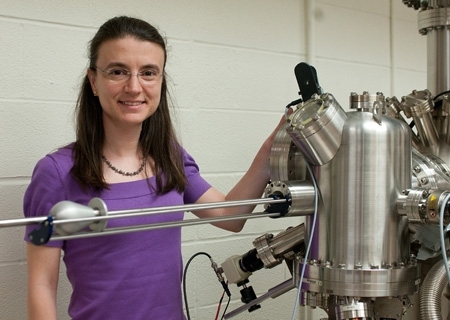
Engineers developing advanced energy technologies such as fuel cells and new-generation reactors will benefit from novel materials knowledge being developed at the Department for Nuclear Science and Engineering’s Laboratory for Electrochemical Interfaces, headed by Assistant Professor Bilge Yildiz.
Researchers there are working toward better understanding of the interfacial properties of oxides and learning to tailor their levels of ion transport, which could help create components with increased resistance to corrosion and other specialized properties.
Read the full feature
Engineers developing advanced energy technologies such as fuel cells and new-generation reactors will benefit from novel materials knowledge being developed at the Department for Nuclear Science and Engineering’s Laboratory for Electrochemical Interfaces, headed by Assistant Professor Bilge Yildiz.
Researchers there are working toward better understanding of the interfacial properties of oxides and learning to tailor their levels of ion transport, which could help create components with increased resistance to corrosion and other specialized properties.
Read the full feature