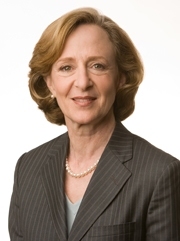
On Monday, Sept. 13, at the Brookings Institution, MIT President Susan Hockfield served on a panel that previewed a soon-to-be released report from the President’s Council of Advisors on Science and Technology (PCAST) on the troubling state of science, technology, engineering and math (STEM) education at the K-12 level in America.
Discussion centered on the critical need to build a very large national cadre of expert teachers in math and science, because, as Hockfield observed, arguably “the most critical impediment to our national competitiveness is the comparatively weak preparation of our students, particularly in math and science,” and the key to improved student performance is providing teachers who are experts in both their subjects and in the art of teaching. Hockfield specified several ways in which research universities could contribute to this effort, including sharing course materials online using platforms like MIT’s OpenCourseWare.
Washington Post columnist E.J. Dionne moderated the discussion, while Eric Lander, PCAST member and director of the Broad Institute, summarized the report. Other panelists included Robert Birgeneau, chancellor of the University of California, Berkeley, and former dean of science at MIT; U.S. Rep. Bart Gordon, the Tennessee congressman who chairs the House Subcommittee on Science and Technology; and Columbia University physicist Brian Greene. The non-profit Math for America, headed by MIT Corporation member Jim Simons, co-sponsored the event.
To learn more about the event, watch video clips and listen to an audio recording of the panel discussion, please visit http://www.brookings.edu/events/2010/0913_stem_education.aspx.
Discussion centered on the critical need to build a very large national cadre of expert teachers in math and science, because, as Hockfield observed, arguably “the most critical impediment to our national competitiveness is the comparatively weak preparation of our students, particularly in math and science,” and the key to improved student performance is providing teachers who are experts in both their subjects and in the art of teaching. Hockfield specified several ways in which research universities could contribute to this effort, including sharing course materials online using platforms like MIT’s OpenCourseWare.
Washington Post columnist E.J. Dionne moderated the discussion, while Eric Lander, PCAST member and director of the Broad Institute, summarized the report. Other panelists included Robert Birgeneau, chancellor of the University of California, Berkeley, and former dean of science at MIT; U.S. Rep. Bart Gordon, the Tennessee congressman who chairs the House Subcommittee on Science and Technology; and Columbia University physicist Brian Greene. The non-profit Math for America, headed by MIT Corporation member Jim Simons, co-sponsored the event.
To learn more about the event, watch video clips and listen to an audio recording of the panel discussion, please visit http://www.brookings.edu/events/2010/0913_stem_education.aspx.