Credit Y2K for the swift rebound of New York City's computing systems after the Sept. 11 attacks, Professor Rae Zimmerman of NYU told an audience from a wide range of MIT departments and programs last Thursday.
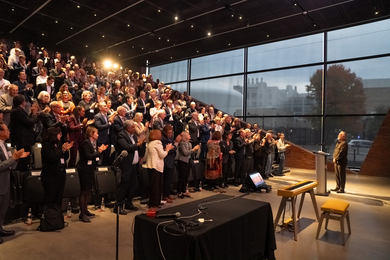
Zimmerman, director of the NSF-funded Institute for Civil Infrastructure Systems at New York University's Robert F. Wagner Graduate School of Public Service and a former president of the Society for Risk Analysis, discussed "Building Resilient Infrastructure to Combat Terrorism" in Room E51-315 as part of the Technology and Policy Program Lecture Series on Homeland Security. She focused on lessons learned from Sept. 11.
System redundancies developed in anticipation of a Y2K glitch that never came helped the city's transportation and telecommunications sectors provide an impressive level of service in the wake of the enormous devastation. However, Zimmerman said that given the scale of the terrorist attacks, criteria for planning and managing civil infrastructure must be reoriented.
Earlier plan criteria such as comfort, convenience, environmental sustainability, ecological soundness, and protection against natural disasters and conventional concerns like power outages are no longer enough. The focus now needs to be on safety in the face of unanticipated disasters such as terrorist attacks. Mobility, portability, flexibility, size and proximity to users will all be important in building resiliency, she said.
Zimmerman described some resilient features of New York's infrastructure that enabled it to keep serving workers and residents in the wake of Sept. 11. For example, according to MTA, transit in lower Manhattan initially lost close to half (42 percent) of its capacity, but through flexible rerouting was able to get much of the system back in operation that day.
Two subway stations were destroyed and five rendered inoperative because of debris. Nevertheless, ridership on New Jersey Transit, which serves Manhattan, went up 44 percent and continues at that higher level. Similarly, use of ferry services increased 28 percent and has dropped little since then.
Zimmerman also discussed the impact on telecommunications. Verizon's cable vault was destroyed and AT&T lost three switches. Each had previously experienced outages and destruction, but this was the first simultaneous event. Nevertheless, said Zimmerman, telecommunications were able to rebound quickly.
Even government agencies moved quickly. A public-private partnership enabled hundreds of permits to be fast-tracked so barges could quickly begin to dredge the coastline and remove residue. "The debris removal effort should go down in history," Zimmerman said.