
Engineers create a programmable fiber
In a first, the digital fiber contains memory, temperature sensors, and a trained neural network program for inferring physical activity.
In a first, the digital fiber contains memory, temperature sensors, and a trained neural network program for inferring physical activity.
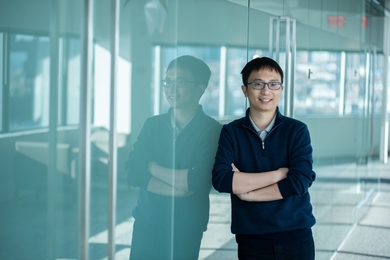
Yichen Shen PhD '16 is CEO of Lightelligence, an MIT spinout using photonics to reinvent computing for artificial intelligence.

Nearly 1,400 joined the AI for Health Care Equity Conference that explored new AI technologies as a platform for change.

Grants will support their research, graduate study, and teaching abroad in 2021-22.
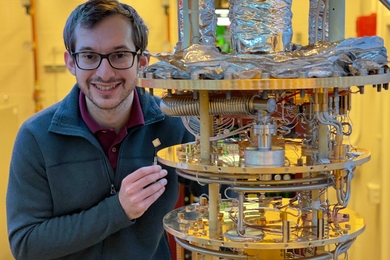
Work on three graphene-based devices may yield new insights into superconductivity.

A machine learning model developed jointly by Janssen and MIT data scientists played a key role in the clinical trial process for the Johnson & Johnson Covid-19 vaccine.

Atomically thin materials are a promising alternative to silicon-based transistors; now researchers can connect them more efficiently to other chip elements.
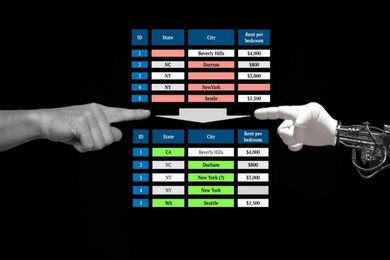
With just 50 lines of code, the program spots and fixes likely errors.

MIT researchers have determined the virus’ protein-coding gene set and analyzed new mutations’ likelihood of helping the virus adapt.

Fellowship funds graduate studies at Stanford University.
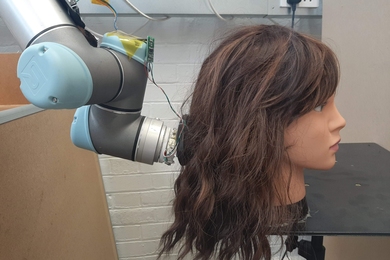
Robotic arm equipped with a hairbrush helps with brushing tasks and could be an asset in assistive-care settings.

On May 6 and 7, researchers from the AI Policy Forum will present their preliminary AI public policy proposals aimed at shaping specific and significant uses of AI in our lives.

Design of miniature optical systems could lead to future cell phones that can detect viruses and more.

SuperUROP scholars apply deep learning to improve accuracy of climate models, profitably match computers in the cloud with customers, and more.
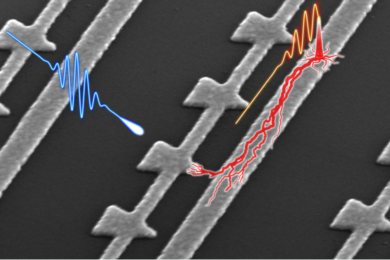
MIT researchers develop compact on-chip device for detecting electric-field waveforms with attosecond time resolution.