Department
Electrical Engineering and Computer Science
Four MIT professors elected to National Academy of Sciences
Liskov, Suresh, Townsend and Young bring to 78 the number of Institute faculty who are NAS members.

MIT and Harvard announce edX
Joint partnership builds on MITx and Harvard distance learning; aims to benefit campus-based education and beyond.
Five from MIT named Fulbright scholars
Two current students and three recent graduates will study abroad for the 2012-13 academic year.

Thwarting the cleverest attackers
Savvy hackers can steal a computer’s secrets by timing its data storage transactions or measuring its power use. New research shows how to stop them.

Algorithmic incentives
A new twist on pioneering work done by MIT cryptographers almost 30 years ago could lead to better ways of structuring contracts.

The robot revolution is just beginning
Rodney Brooks outlines his vision of the future to student entrepreneurs.

Lynch named Athena Lecturer
Professor honored for advances in distributed systems that enable dependable Internet and wireless network applications.
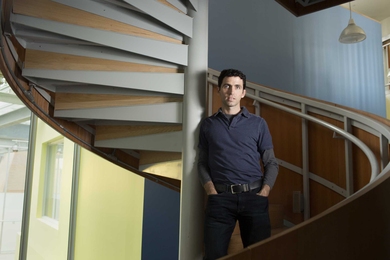
Getting to the root of genetics
Manolis Kellis uses computational techniques to decipher human disease.
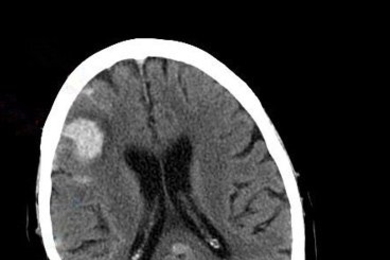
Sensing when the brain is under pressure
New monitoring strategy forgoes surgery, could help doctors treat patients with head injuries.

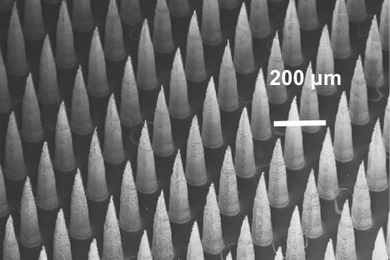
How to corner the MEMS market
Government investment in the manufacture of micromachines could pay huge dividends, but in the meantime, MIT researchers are developing new fabrication techniques.
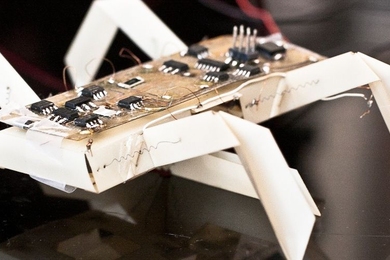
All in a day’s work: Design and print your own robot
MIT project, funded with $10 million NSF grant, could transform robotic design and production
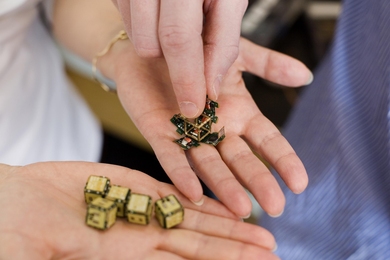
Self-sculpting sand
New algorithms could enable heaps of ‘smart sand’ that can assume any shape, allowing spontaneous formation of new tools or duplication of broken mechanical parts.