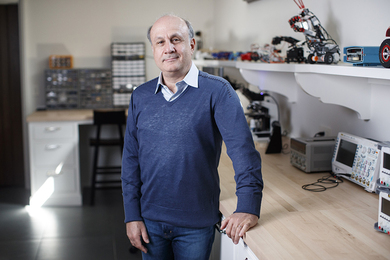
MIT welcomes David Siegel SM ’86, PhD ’91 as its next Innovation Fellow
Computer scientist, entrepreneur, and philanthropist will collaborate with the MIT Schwarzman College of Computing to advance AI and scientific discovery.
Computer scientist, entrepreneur, and philanthropist will collaborate with the MIT Schwarzman College of Computing to advance AI and scientific discovery.
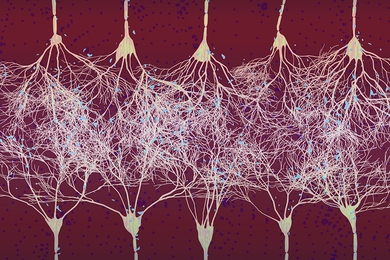
Scientists find that learning to identify a new object subtly reshapes visual processing in the brain.
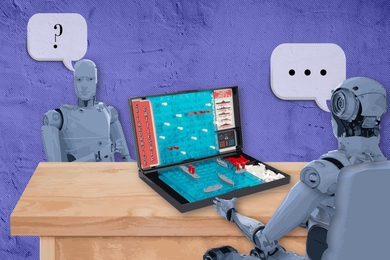
MIT researchers use the classic game as a test bed for AI agents, finding a small AI model can outperform the biggest ones at 1 percent of the cost.
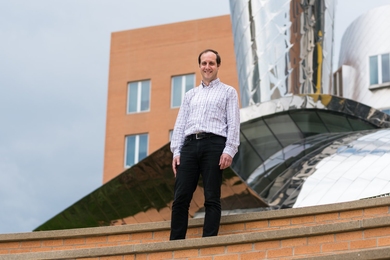
Torralba’s research focuses on computer vision, machine learning, and human visual perception.
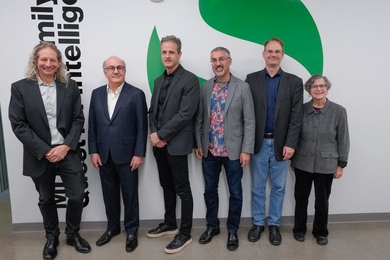
With support from the Siegel Family Endowment, the newly renamed MIT Siegel Family Quest for Intelligence investigates how brains produce intelligence and how it can be replicated to solve problems.
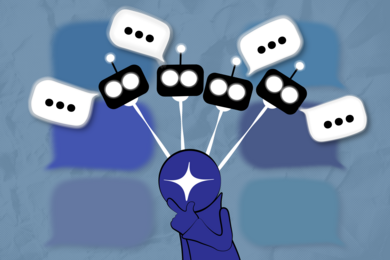
The “self-steering” DisCIPL system directs small models to work together on tasks with constraints, like itinerary planning and budgeting.

By visualizing Escher-like optical illusions in 2.5 dimensions, the “Meschers” tool could help scientists understand physics-defying shapes and spark new designs.
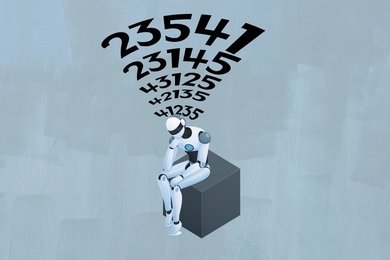
Language models follow changing situations using clever arithmetic, instead of sequential tracking. By controlling when these approaches are used, engineers could improve the systems’ capabilities.

The “PRoC3S” method helps an LLM create a viable action plan by testing each step in a simulation. This strategy could eventually aid in-home robots to complete more ambiguous chore requests.

By allowing users to clearly see data referenced by a large language model, this tool speeds manual validation to help users spot AI errors.
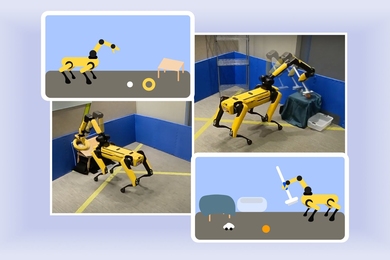
A new algorithm helps robots practice skills like sweeping and placing objects, potentially helping them improve at important tasks in houses, hospitals, and factories.
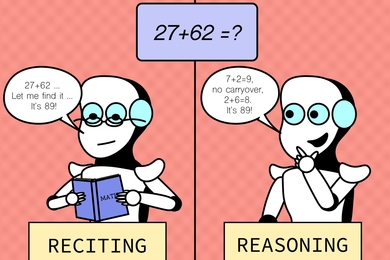
New CSAIL research highlights how LLMs excel in familiar scenarios but struggle in novel ones, questioning their true reasoning abilities versus reliance on memorization.
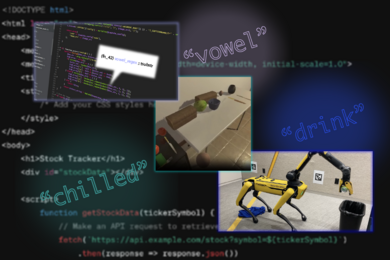
Three neurosymbolic methods help language models find better abstractions within natural language, then use those representations to execute complex tasks.
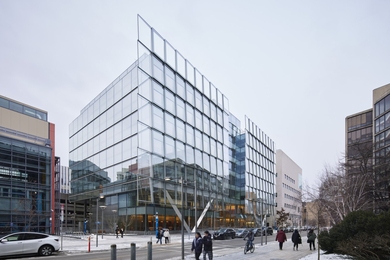
The MIT Schwarzman College of Computing building will form a new cluster of connectivity across a spectrum of disciplines in computing and artificial intelligence.
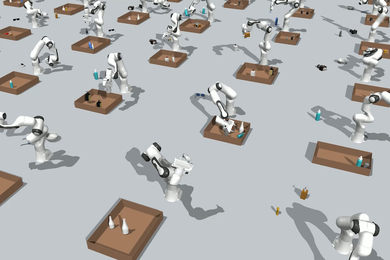
Researchers coaxed a family of generative AI models to work together to solve multistep robot manipulation problems.