
3 Questions: On biology and medicine’s “data revolution”
Professor Caroline Uhler discusses her work at the Schmidt Center, thorny problems in math, and the ongoing quest to understand some of the most complex interactions in biology.
Professor Caroline Uhler discusses her work at the Schmidt Center, thorny problems in math, and the ongoing quest to understand some of the most complex interactions in biology.
New research shows the natural variability in climate data can cause AI models to struggle at predicting local temperature and rainfall.
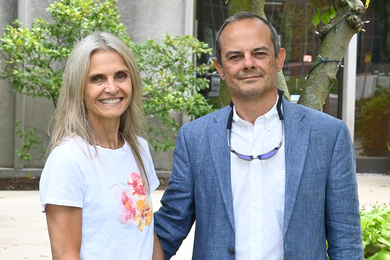
Raul Radovitzky and Flavia Cardarelli reflect on a decade of telling bad dad jokes, learning Taylor Swift songs, and sharing a home with hundreds of students.

As large language models increasingly dominate our everyday lives, new systems for checking their reliability are more important than ever.
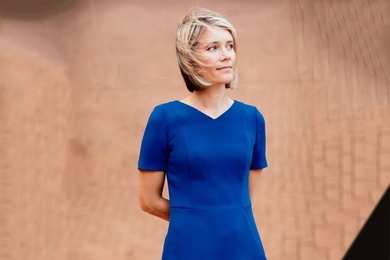
Trancik will lead multidisciplinary research center focused on the high-impact, complex, sociotechnical systems that shape our world.
New research can identify opportunities to drive down the cost of renewable energy systems, batteries, and many other technologies.

New research shows automatically controlling vehicle speeds to mitigate traffic at intersections can cut carbon emissions between 11 and 22 percent.
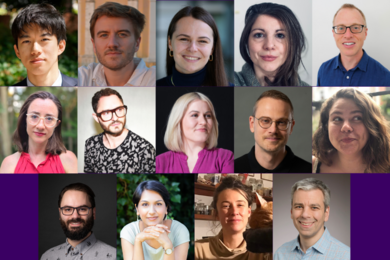
New professors join Comparative Media Studies/Writing, History, Linguistics and Philosophy, Music and Theater Arts, and Political Science.

This new approach could lead to enhanced AI models for drug and materials discovery.

A new approach for testing multiple treatment combinations at once could help scientists develop drugs for cancer or genetic disorders.
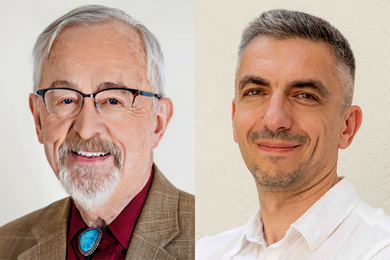
Sasha Rakhlin, a professor in IDSS and brain and cognitive sciences, has been named the inaugural holder of the new professorship.
In an analysis of over 160,000 transplant candidates, researchers found that race is linked to how likely an organ offer is to be accepted on behalf of a patient.

In a new study, researchers discover the root cause of a type of bias in LLMs, paving the way for more accurate and reliable AI systems.

A new book from Professor Munther Dahleh details the creation of a unique kind of transdisciplinary center, uniting many specialties through a common need for data science.

The system automatically learns to adapt to unknown disturbances such as gusting winds.