
Training LLMs to self-detoxify their language
A new method from the MIT-IBM Watson AI Lab helps large language models to steer their own responses toward safer, more ethical, value-aligned outputs.
A new method from the MIT-IBM Watson AI Lab helps large language models to steer their own responses toward safer, more ethical, value-aligned outputs.

The approach maintains an AI model’s accuracy while ensuring attackers can’t extract secret information.

A new method lets users ask, in plain language, for a new molecule with certain properties, and receive a detailed description of how to synthesize it.
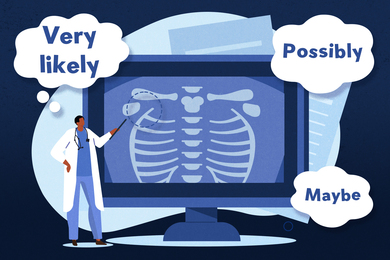
The framework helps clinicians choose phrases that more accurately reflect the likelihood that certain conditions are present in X-rays.

At the 2025 MIT Energy Conference, energy leaders from around the world discussed how to make green technologies competitive with fossil fuels.

More than 1 million people are contributing their data to Vana’s decentralized network, which started as an MIT class project.

This new framework leverages a model’s reasoning abilities to create a “smart assistant” that finds the optimal solution to multistep problems.

Professor of media technology honored for research in human-computer interaction that is considered both fundamental and influential.

Ana Trišović, who studies the democratization of AI, reflects on a career path that she began as a student downloading free MIT resources in Serbia.

EduFi, founded by an MIT alumna, provides low-interest student loans to families in Pakistan so more can attend college.

A new international collaboration unites MIT and maritime industry leaders to develop nuclear propulsion technologies, alternative fuels, data-powered strategies for operation, and more.

Researchers fuse the best of two popular methods to create an image generator that uses less energy and can run locally on a laptop or smartphone.
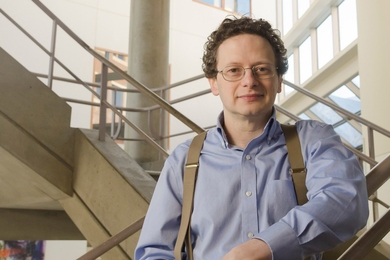
Stuart Levine ’97, director of MIT’s BioMicro Center, keeps departmental researchers at the forefront of systems biology.

As artificial intelligence develops, we must ask vital questions about ourselves and our society, Ben Vinson III contends in the 2025 Compton Lecture.

U.S. Air Force engineer and PhD student Randall Pietersen is using AI and next-generation imaging technology to detect pavement damage and unexploded munitions.