Skip to content ↓

📬 Want a dose of MIT in your inbox? Subscribe to the MIT Daily and/or MIT Weekly newsletters.

Top News

Looking for audio? Listen to the MIT News podcast →

Recent Highlights

More MIT News articles

In the Media

Forbes

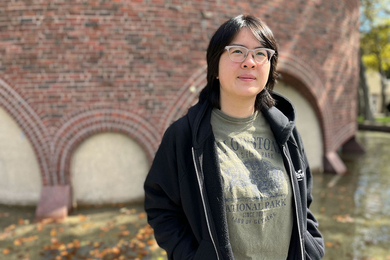
Undergraduate student Melody Chen, a former MIT Research Science Institute Scholar, has been named in the 2026 class of U.S. Presidential Scholars, writes Forbes’ Michael T. Nietzel. “This year’s group consists of 161 outstanding high school seniors, who were selected for their accomplishments in academics, the arts, and career and technical education fields as well as for commitments to community service and leadership,” notes Nietzel. “Being named a U.S. Presidential Scholar is considered one of the nation’s most prestigious academic awards for high school graduates.”  

Interesting Engineering

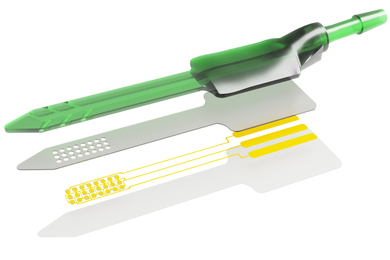
MIT researchers have designed LUCID, a thin, flexible and implantable device “that pairs a slow-release drug reservoir with tiny ultrasound transducers, aiming to help prevent glioblastoma from coming back after surgery,” writes Munis Raza for Interesting Engineering. “The transducers generate ultrasound waves right at the tip of the needle, helping drug molecules diffuse farther into [brain] tissue after release,” notes Raza. “Doctors could implant the device during surgery and let it gradually release drugs to kill remaining tumor cells.” 

GBH

Prof. Suraj Cheema joins Edgar B. Herwick, host of GBH’s “The Curiosity Desk,” to discuss the functionality and global development of computer chips. “The know-how of how to make these chips is very specialized,” says Cheema. “Imagine there’s 100 steps in the process, not just that printer that costs a few $100 million, just all these other kinds of steps that go along with it. We have 20 million transistors in this little chip. We want them all to work. They all have to work [for the chip to function].”  

Bloomberg

Prof. Gary Gensler speaks with “Bloomberg Surveillance” hosts Tom Keene and Paul Sweeney about how the current AI investment boom may impact the U.S. economy. “You can be positive about the technology and still say our capital markets tend to overfund in exuberance,” says Gensler. “I think that we will have a deceleration of this AI boom, and then some form of a reversal in the next 18 to 30 months. And the question really, to me, is a little bit about timing: when and then how deep it [the deceleration] is. I think the depth of it is going to be dependent on how much debt is in the system, where it is [and] who holds it.”  

Fortune

Senior Research Scientist Joseph Coughlin, director of the MIT AgeLab discusses generational differences in aging and achieving life milestones for a Fortune article by reporter Nick Lichtenberg. Currently, “we’re creating new life stages, or we’re extending life stages that used to be done in short order,” says Coughlin. “The real generation gap is about expectations. Not only do [generations] expect to live longer, but they expect to live better.” 

Fox News

Research Scientist Judah Cohen joins Fox News to discuss the potential for a historic, massive polar vortex disruption, or early season weakening, that “could send atmospheric impacts rippling across the planet in the weeks or even months to come.” Cohen says, “this will, I think almost undoubtedly, be the largest, earliest disruption of the polar vortex on record. What the impacts could be on a regional basis is really hard to know. Everything is possible. Traditionally it [the disruption] is thought to bring colder and snowier weather to the eastern U.S. about two weeks after the event kind of peaks, but in recent history that has not been the case.”  

GBH

Prof. Charles Stewart III, director of MIT’s Election Data and Science Lab, speaks with Craig LeMoult during GBH’s “Morning Edition” about the electoral environment in Massachusetts. “I am somebody who thinks that activists tend to overestimate the importance and the effects of voting reforms,” says Stewart. “But having said that, I think that Massachusetts needs something to shake it up from the current electoral environment that it has.” 

Newsweek

Prof. Eric Klopfer, co-chair of MIT’s Ad Hoc Committee on AI Use in Teaching, Learning, and Research Training, speaks with Newsweek’s Amanda Greenwood and Hollie Silverman about homework in an era of AI. “Students need experience to understand and regulate their AI behaviors,” says Klopfer. “They need to learn how it can augment, rather than replace, their learning, and decide how to use it.”  

Manufacturing Dive

For Manufacturing Dive, reporter Nathan Owens spotlights MIT’s Technologist Advanced Manufacturing Program (TechAMP), a 12-month-long program that combines online instruction with hands-on lab work to bridge the gap between technical engineering and management skills, designed for working technicians or operators. “Students gain foundational leadership, process control and systems thinking skills,” notes Owens. TechAMP has “really shown me how to communicate more, communicate problems more, communicate solutions more,” says Brian Coppenrath, who completed the program.  

STAT

At the STAT Summit, President Sally Kornbluth joined Holden Thorp, editor-in-chief of the Science family of journals, for a panel moderated by STAT’s Anil Oza. During the conversation, Kornbluth emphasized the importance of curiosity-driven research and education at institutions like MIT, highlighting MIT for America, a new initiative aimed at ensuring learners and educators from Kindergarten through community college across the country have access to STEM education. “We want to both meet people where they are, give their kids the opportunity, and also make them understand us as people who care about their communities,” says Kornbluth.

Metropolis

Metropolis reporter Anthony Paletta details how MIT’s inaugural Future Fest “brought together visionary leaders across design, technology, and art to address the world’s most pressing problems.” The festival featured the public debut of the redesigned Metropolitan Warehouse, along with conversations, exhibits and demonstrations on architecture, design and technology. “There are no shortage of things going wrong in the world, and others likely to follow,” writes Paletta, “but MIT’s Future Fest offered reassuring proof that we’ve not run out of means to address these problems.” 

Forbes

Forbes reporter Marshall Shepherd highlights the Probabilistic Bias Correction tool, a new AI system developed by MIT researchers that could extend weather forecasting predictability beyond two weeks.  

TechCrunch

After observing the behavior of 13 AI agents on a simulated desert island, MIT researchers suggest that allowing agents to explore “without a goal” could be an effective way to teach AI agents new skills, reports Aditya Mehta for TechCrunch. “We normally develop artificial agents by deciding in advance what they should practice, what they should optimize, and what counts as progress,” the researchers write. “Play suggests another regime: give an agent a sufficiently rich and safe world, let it choose what is interesting, and allow useful knowledge to accumulate from the history that follows.” 

Community Updates

Featured Multimedia

Video thumbnail

MIT quantum engineer Will Oliver joins President Sally Kornbluth to discuss the promise of quantum computing, the challenges of scaling the technology, and its potential to transform fields from drug discovery to materials science.

Video thumbnail

What if solar panels could be lighter, thinner, and easier to install? MIT PhD student Karen Yang explores how developing flexible, lightweight solar technology could make clean energy more accessible, from remote communities and disaster relief efforts to rooftops that can't support traditional solar panels.

Video thumbnail

MIT researchers developed SANDO, a new navigation system that helps robots safely navigate unfamiliar environments while avoiding moving obstacles. The system can rapidly plan and adjust a collision-free path using onboard sensors and computing, with safety backed by mathematical guarantees.

Video thumbnail

Quantum computers could revolutionize everything from drug discovery to cryptography, but building the hardware remains a challenge. MIT research scientist Patrick Strohbeen explores how studying materials at the nanoscale could help unlock the potential of quantum computing.

Video thumbnail

Alex Slocum, the Walter M. and A. Hazel May Professor of Mechanical Engineering at MIT, has a serious message for students in Fundamentals of Precision Product Design, but a famously fun way of delivering it. Students describe the course as “creative chaos,” an approach that drives home the importance of precision and repeatability in engineering design.

More News