Skip to content ↓

📬 Want a dose of MIT in your inbox? Subscribe to the MIT Daily and/or MIT Weekly newsletters.

Top News

Looking for audio? Listen to the MIT News podcast →

Recent Highlights

More MIT News articles

In the Media

Bloomberg

Bloomberg’s Mark Gongloff highlights a paper by Prof. John Sterman and Jennifer Turliuk MBA ‘25, that found that growing emissions from AI technologies are creating a “carbon debt” that will take extended time to reduce. “Even if that [carbon] debt is eventually repaid by AI climate solutions, the additional warming and climate damage will persist for decades to millennia,” Sterman and Turliuk write.  

CBS Boston

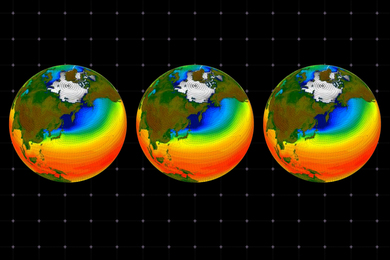
CBS Boston meteorologist Jacob Wycoff visits Research Scientist Judah Cohen at MIT a to learn more about his team’s work developing an AI tool that may break through the “predictability desert,” improving weather forecasting ability up to six weeks in the future. “We have seen a revolution almost, in the ability to predict [weather] up to one week, 10 days, maybe 14 days, but after that it kind of went over a cliff,” says Cohen. With the tool, “we can make an improvement in the sub-seasonal two to six week forecast window that was better than what was basically a coin flip” in the past.  

Financial Times

Prof. Sherry Turkle’s latest book, “Artificial Intimacy: Who We Become When We Talk to Machines,” is named one of the best technology books of 2026 by the Financial Times’ John Thornhill. “Turkle is one of the sharpest writers exploring the frontiers between technology and society,” writes Thornhill. She “describes how AI chatbots are rewiring our brains and messing with our emotions. The danger is that we become addicted to artificial intimacy and over-trust machines. This is a powerful manifesto for reconnecting with human reality.”

Forbes

In an interview with Forbes’ Gemma Allen, Christina Qi ‘13, CEO of Databento, discusses how to develop strong social and financial capital within a business. At Databento, Qi says her ambitions are to “build the financial data infrastructure that a new generation of developers, institutions and AI applications will depend on.” 

Nature

MIT researchers have demonstrated how an AI model “can interpret the raw internal values of some other models well enough to predict what different parts of the systems do. It can then edit the models to make improvements—including boosting their mathematical abilities,” writes Nature’s Elizabeth Gibney. “The authors hope that, with development, the findings could boost the efficiency of AI models,” notes Gibney. “We may need much less data, much less compute and much less time to teach our models a specific skill,” says graduate student Rikiya Takehi. 

Newsweek

Newsweek’s Amanda Greenwood highlights Lumina, a simulation developed by a team of researchers from MIT and other institutions, that allows users “to follow the emergence of stars and galaxies across the first 2 billion years of cosmic history and compare the simulation's predictions with observations from modern telescopes.” Lumina “follows the evolution of dark matter, gas, stars and radiation across a volume of space about 1.6 billion light-years wide,” writes Greenwood. “Scientists can use the simulation to study both large-scale cosmic structure and the formation of individual galaxies.”  

Forbes

MIT senior Arianna Doss has been honored as one of the 2027 U.S. Rhodes Scholars, a group of 32 students that will travel to Oxford University next year to continue their studies, reports Forbes’ Michael T. Nietzel. At MIT, Doss is “majoring in biological engineering and political science. She has interned at Northwestern Medicine’s Bronzeville Outpatient Center and also worked on maternal health policy as an intern in the office of U.S Representative Lauren Underwood,” notes Nietzel. “At Oxford, she will study for an M.Sc. in Comparative Social Policy and an M.Sc. in Global Health Science and Epidemiology.”

NBC News

Prof. Stuart Madnick speaks to NBC News reporters Jane Lytvynenko and Kevin Collier about organizations minimizing damage from recent technology outages. “I think we’re in the middle of a perfect storm right now,” says Madnick. “Society has largely become dependent on automation and it delivers tremendous benefits to all of us. The trouble is, when something fails, the consequences can be quite considerable.” 

The New York Times

Prof. John Hansman speaks to The New York Times’ Christina Morales about how the Federal Aviation Administration’s (F.A.A.) new router likely overwhelmed their older equipment, leading to the recent communications network outage. “Now you have multiple parts of the old [F.A.A.] system that are running much faster than they ever ran,” says Hansman. “You never had this problem, because you never had all of the elements running at that max speed.” 

CNN

Research Scientist Judah Cohen speaks to CNN’s Laura Paddison and Brandon Miller about the potential for El Niño to drive away cold air from the current weakened polar vortex. There’s an assumption that “El Niño is kind of this runaway freight train, and nothing’s going to get in the way of it,” says Cohen. But “whether there’s cold air or not will depend on the behavior of the polar vortex.”  

Forbes

MIT has been ranked as the No. 1 college in the Northeast by Forbes, “thanks to exceptional student outcomes,” reports Lisa Chambers. “In addition to a 96% six-year graduation rate, MIT ranks among the nation’s strongest institutions for producing graduates who go on to earn PhDs, relative to its undergraduate enrollment,” notes Chambers.  

Boston Business Journal

Boston Business Journal reporter Grant Welker and photographer Gary Higgins visit the renovated Metropolitan Warehouse, now home to MIT’s School of Architecture and Planning, to learn more about how the 130-year-old storage facility was transformed. Prof. John Ochsendorf describes how the renovation process included preserving construction mementos such as strategic openings and cutaways that reveal historic “building archeology.” “We think of this building as a living laboratory for students,” says Ochsendorf. “It’s a teaching tool for future architects.” 

Community Updates

Featured Multimedia

Video thumbnail

The entirely student-run, self-taught and highly collaborative MIT Combat Robotics Club (CRC) builds high energy fighting machines to compete in House Battles and larger competitions. Students learn a variety of skills, from CAD and FEA to CNC Machining and Welding — and they learn through watching their creations get completely destroyed.

Video thumbnail

MIT quantum engineer Will Oliver joins President Sally Kornbluth to discuss the promise of quantum computing, the challenges of scaling the technology, and its potential to transform fields from drug discovery to materials science.
Video thumbnail

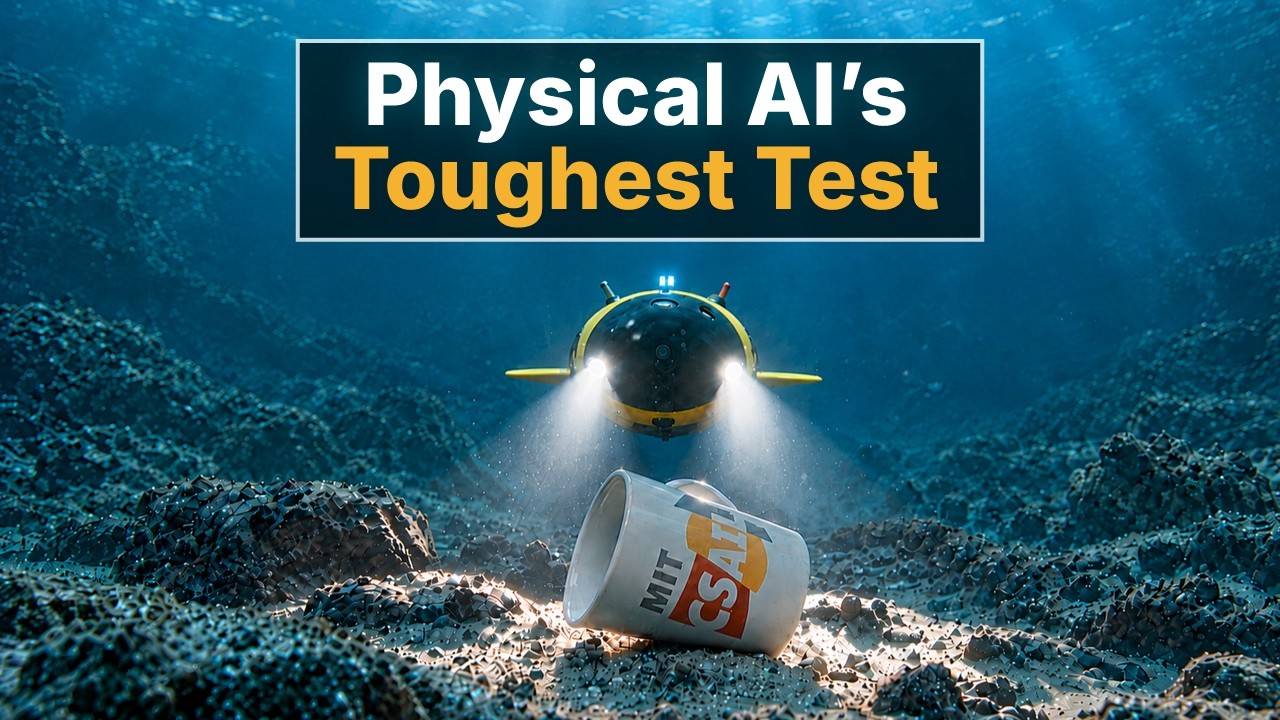
Exploring the ocean depths is one of AI’s toughest challenges—there’s no GPS, Wi-Fi, or clear visibility underwater. MIT CSAIL researchers are teaching autonomous robots to map murky seafloors using acoustic sonar, search in coordinated swarms, and master the physical dexterity needed to navigate uncharted waters.

Video thumbnail

What if solar panels could be lighter, thinner, and easier to install? MIT PhD student Karen Yang explores how developing flexible, lightweight solar technology could make clean energy more accessible, from remote communities and disaster relief efforts to rooftops that can't support traditional solar panels.

Video thumbnail

Alex Slocum, the Walter M. and A. Hazel May Professor of Mechanical Engineering at MIT, has a serious message for students in Fundamentals of Precision Product Design, but a famously fun way of delivering it. Students describe the course as “creative chaos,” an approach that drives home the importance of precision and repeatability in engineering design.

Video thumbnail

Quantum computers could revolutionize everything from drug discovery to cryptography, but building the hardware remains a challenge. MIT research scientist Patrick Strohbeen explores how studying materials at the nanoscale could help unlock the potential of quantum computing.
More News