Building a nuclear power plant is one of the world’s most complex construction projects. It requires thousands of trucks to ship parts, often to remote regions, where huge teams of skilled workers like electricians and welders come together to assemble everything over many years.
Financing such projects is difficult, in part, because no one wants to risk loaning money to a project that might never generate power and revenue, whether that’s due to technical failures, the inability to recruit enough talent, or regulatory hurdles.
Stated this way, it’s no surprise the average nuclear plant costs twice as much as originally expected and faces delays of many years. Those cost overruns and delays have ground the nuclear industry to a near halt: When Georgia finally turned on its Vogtle Unit 3 reactor in 2023 (seven years late), it was the first new reactor constructed in the U.S. in over 30 years.
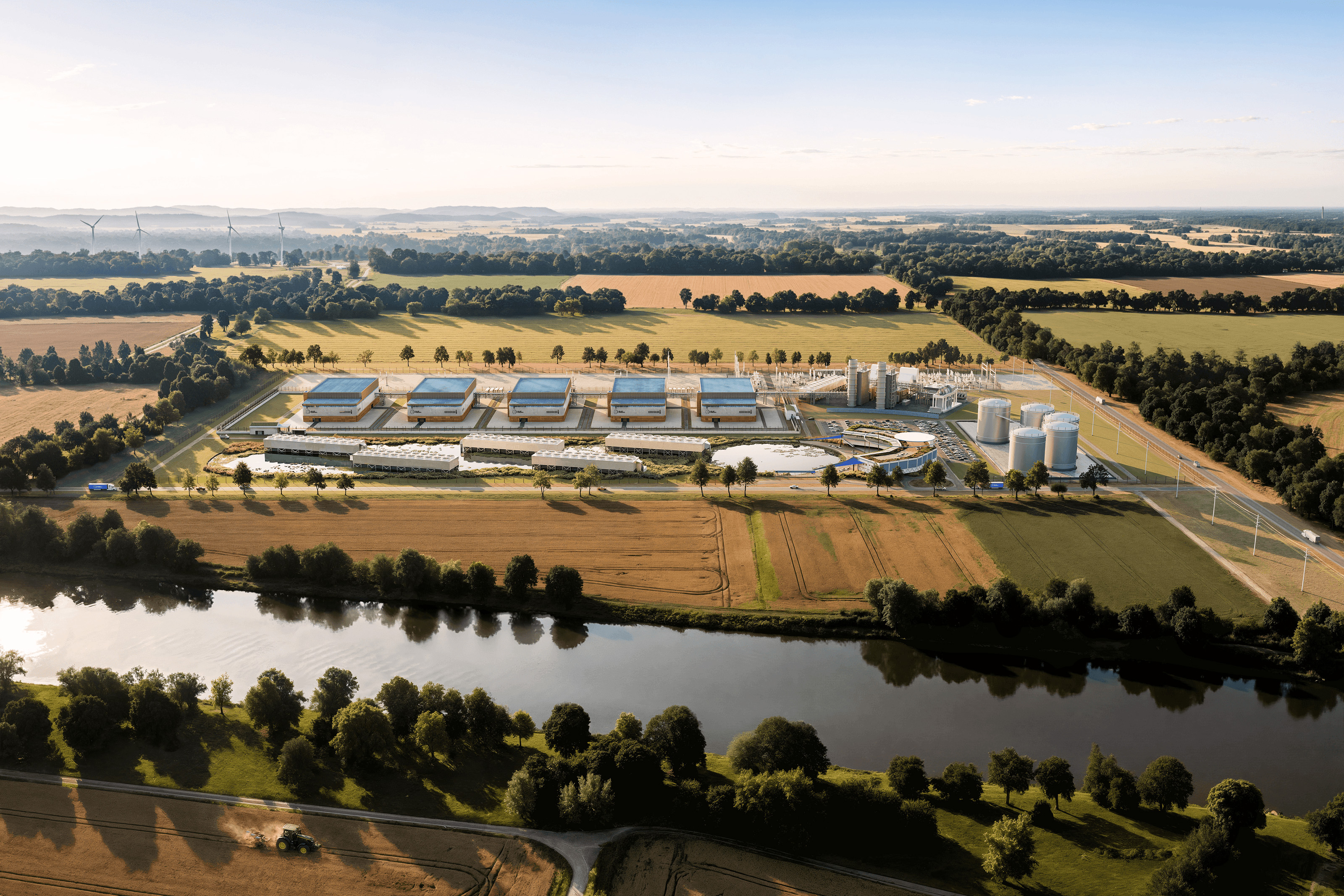
Blue Energy wants to make deploying nuclear power plants more like wind, solar, and gas projects. The company prefabricates huge blocks of its nuclear plants at shipyards, where workers and equipment already produce huge steel structures for the oil and gas industry every day, then ships the blocks on barges to the site of the plant for final assembly.
“The nuclear problem is a construction problem,” says Blue Energy founder and CEO Jake Jurewicz ’14, SM ’15, who grew up in the construction industry and studied the differences between nuclear and oil and gas projects at MIT. “On paper, nuclear technology is almost perfect: It operates above 90 percent capacity, it’s zero carbon, dispatchable, extremely high reliability, and has predictable cash flow. We don’t have enough nuclear power because we’re really bad at building it. But there’s already a huge manufacturing supply base for offshore oil and gas and offshore wind. If we can point that toward building nuclear plants, and finance it the same way, we can reinvigorate the industry.”
Blue Energy’s prefabricated blocks weigh around 1,500 tons and are designed to be easily assembled at their destination to complete a nuclear power unit over the course of a single year. The company is further reducing barriers to financing and speeding up construction timelines by designing its early plants to run on gas initially before switching to nuclear reactors, which it hopes will generate revenue within three years from the start of construction.
The company has already gained approval from the Nuclear Regulatory Commission for its gas-to-nuclear approach and has also secured an agreement with GE Vernova Hitachi Nuclear Energy for its first project, a 2.5 gigawatt hybrid nuclear power plant in Victoria, Texas, that is scheduled to begin producing power in 2030. This September, Blue Energy submitted the first part of its application to the NRC to begin construction on its Texas project, making it just one of five companies to do so in the current nuclear development era.
“Our first site is a great power generation project for that community because it's going to generate a lot of excess power,” Jurewicz says. “It’s going to show a new model for the world: This is a way the U.S. and its allies can deliver a turnkey nuclear power plant and turnkey energy sovereignty.”
A new blueprint for nuclear
Jurewicz grew up in Chicago, where he worked as a construction draftsman through high school. When he arrived at MIT, he double majored in nuclear engineering and physics, then stayed at MIT for a masters in the Department of Nuclear Science and Engineering. He also minored in energy studies through the MIT Energy Initiative.
Jurewicz’s master’s thesis explored ways nuclear power plant construction could apply lessons from the offshore oil and gas industry.
“If you’re trying to solve the construction problem, find parallel industries where people have solved it before,” Jurewicz says. “That’s why I looked at offshore oil and gas as well as nuclear shipyards in the U.S. and South Korea. We build oil and gas plants all the time, so what looks different about the way we build and execute an oil and gas plant relative to how we build a nuclear plant? They’re both mostly steel welding.”
Shipyards have several advantages over other sites for building nuclear power plants. For one, they already have thousands of skilled workers and loads of specialized equipment. They can also manufacture things in controlled environments, enabling increased automation and reducing uncertainty.
Following graduation, Jurewicz worked in corporate strategy at the utility company Exelon Energy, where he sponsored research at MIT. He originally considered starting Blue Energy as a graduate student with an approach that included creating a new passive safety system and going through a new regulatory insurance framework.
When he founded Blue Energy in 2023, he wanted to minimize risks with a more conventional reactor design. That includes prefabricating functional chunks of the reactor — what the company calls “Blue Blocks” — at a shipyard using standard manufacturing approaches that meet nuclear licensing and quality assurance requirements.
“The 1,500-ton Blue Block prefabricated modules are fully functional mechanically and electrically, they have plumbing — everything is delivered ready to run directly to the site,” Jurewicz says. “Then we have this gas-to-nuclear technology that allows us to get things going earlier with gas by building the whole nuclear steam turbine system right away and energizing it with steam from gas combustion turbines, which means we can finance it as a gas plant, so the cost of capital goes down. It dramatically lowers the cost of the project, and it reduces risk. Then we switch it with the nuclear reactor.”
Blue Energy’s nuclear reactor will be a small modular light water reactor that has already been approved by the Nuclear Regulatory Commission and is made by GE Vernova Hitachi Nuclear Energy.
Blue Energy’s first power plant in Texas will provide 1 gigawatt of power using two GE Vernova gas turbines in 2030 and then add another 1.5 gigawatts of power from up to five small modular reactors beginning in 2032.
“It will be pretty easy to add more modular reactors to the site, so we can lower the cost to that community to provide things like water desalination, which is a big issue in south Texas,” Jurewicz says. “This power infrastructure is clean, reliable, and resilient through hurricanes or any other weather scenario that can happen in that community. It creates hundreds of high-paying permanent jobs and the foundation for a lot of local economic growth.”
Faster, cheaper nuclear
Historically, nuclear power plants have taken 10-plus years of construction. Blue Energy believes it can shorten that to about 36 months. The company is projecting power from later projects to reach about $5,000 per kilowatt. For context, the Vogtle nuclear plant delivers power at more than twice that cost.
Jurewicz believes Blue Energy’s lower prices could finally inject much-needed life into the U.S. nuclear industry.
“Despite all of the excitement around nuclear, you haven’t seen real power purchase agreements get signed because there’s a stalemate on who’s going to take the construction overrun risk,” Jurewicz says. “The government doesn’t want to take it. The construction companies don’t have the balance sheet to take it. The utilities can’t take it. Even the hyperscalers won’t take a two-or-three-times cost overrun risk. Blue Energy is introducing a fifth party to break the stalemate, which is the shipyards and fab yards, which are best positioned to take the risk because they can make things in a controlled fabrication environment, so they'll take the risk on construction in their own yards.”