Skip to content ↓

A serendipitous discovery

Press Contact:

Denise Brehm
Phone: 617-253-8069
Department of Civil and Environmental Engineering

Media Download

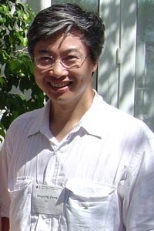
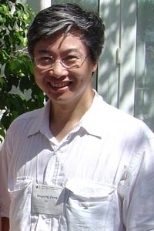
Shuguang Zhang
Download Image
Caption: Shuguang Zhang
Credits: Photo / Beau Peelle

*Terms of Use:

Images for download on the MIT News office website are made available to non-commercial entities, press and the general public under a Creative Commons Attribution Non-Commercial No Derivatives license. You may not alter the images provided, other than to crop them to size. A credit line must be used when reproducing images; if one is not provided below, credit the images to "MIT."

Close
Shuguang Zhang
Caption:
Shuguang Zhang
Credits:
Photo / Beau Peelle

Ten years ago, Shuguang Zhang was working in the laboratory of Alexander Rich, the William Thompson Sedgwick Professor of Biophysics in MIT's Department of Biology, exposing rat cells to the same kind of substance that builds up in the brains of Alzheimer's patients. He half-expected to see the cells, left overnight in dishes with peptides, to be dead in the morning. Instead, those in one out of six dishes were thriving and had grown right on top of a membrane.

It took Zhang a year to figure out the molecular reasons that these peptides undergo self-assembly in the presence of a salt. The answer came to him one day as he was playing with his son's Legos and saw how precisely the pieces fit together. It was the first self-complementary peptide found in nature, Zhang said. He recognized it as a new material with many potential applications. MIT filed for two patents, which were issued in 1997 and 1999.

As Zhang further manipulated the peptides, he found that he could use them as a substrate and grow cells on them in any conceivable pattern. He made them into striking rows and lines and bars. He even spelled out the letters "MIT" using cells.


Related Links

Related Topics

More MIT News

Globular blue and white orbs "examining" single-stranded RNA products and marking them with green checks or red x's

Why are some bacterial genes high in purines?

In certain species of bacteria, the answer lies in shielding RNA transcripts from a quality-control factor called Rho. Understanding the requirements for expressible sequences is critical for expression engineering of therapeutic agents.

Read full story

Rich Nielsen, Volha Charnysh, Kevin Dorst, and Emily Richmond Pollock seated at a table, talking

Building a scholarly community

The SHASS Faculty Fellows Program, administered by the MIT Human Insight Collaborative, is fostering new research projects and creating space for supportive and interdisciplinary discussion.

Read full story