
Craig Rowe soars to new heights
The aircraft mechanic is the lead crew chief of Lincoln Laboratory’s Gulfstream IV and recently oversaw the plane’s major modification.
The aircraft mechanic is the lead crew chief of Lincoln Laboratory’s Gulfstream IV and recently oversaw the plane’s major modification.

Making a decision requires juggling a set of options without getting them confused or losing track of them. A new MIT study shows how neurons encode information to maximize clarity throughout the process.
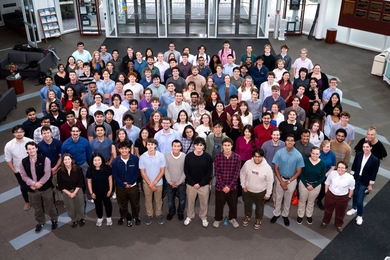
Anna Raymaker and Vivek Jagadeesh tackled cybersecurity threats to ships and inside operating systems, respectively.
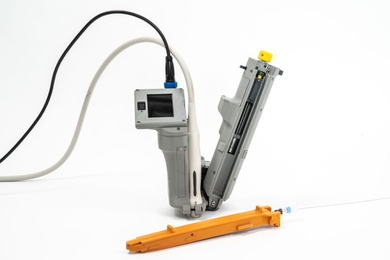
The handheld catheterization device AI-GUIDE, created by Lincoln Laboratory and Massachusetts General Hospital, promises improved health outcomes for injured service members and civilians.

The work is part of a multiyear effort to develop a distributed sensor network for relaying data collected from this critical region.

The modified aircraft will support an ongoing US Air Force program to assess and enhance the survivability of air and space vehicles.
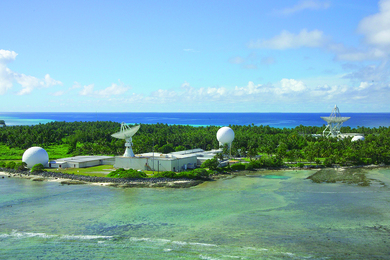
Members of the laboratory community reflect on technology impacts that shaped the United States and the world over the past 75 years.

PhD student Lauren Fortier is building on the experience she gained operating a nuclear plant for the Navy to solve a critical hurdle in the wider adoption of the energy source.
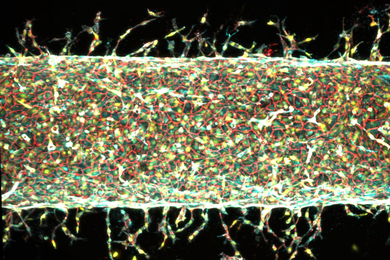
Gently stretching and pulling a “blood vessel on a chip” encourages controlled sprouting of new vessels, for possible use in artificial tissues or organs.
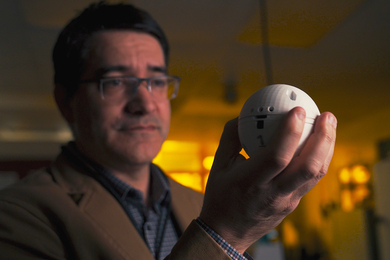
The “TOSSIT” device, developed at MIT Lincoln Laboratory, can warn service members and first responders of dangerous vapors and aerosols.

A USAF cadet and a Lincoln Laboratory researcher found AI chatbots can help nontechnical service members produce viable software applications for their unique problems.
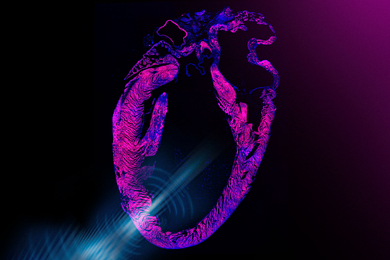
The new design could offer a surgery-free alternative to traditional cardiac implants.
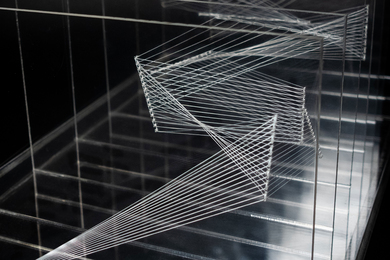
A new technique helps scientists measure a phenomenon that can cause quantum circuits to perform differently than expected, increasing the error in computations.

With a novel design, MIT researchers overcame a stubborn problem that has limited the effectiveness of chip-based systems for lidar.
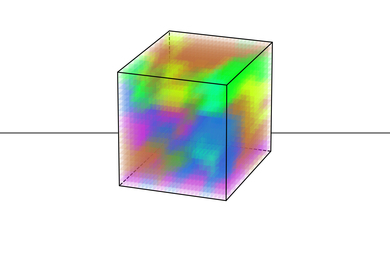
Relaxor ferroelectrics have been used in electronics and sensors for decades, but the source of their unique properties was a mystery until now.