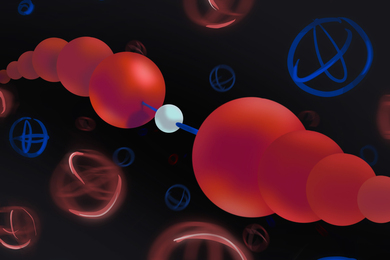
What makes a good proton conductor?
MIT researchers found a way to predict how efficiently materials can transport protons in clean energy devices and other advanced technologies.
MIT researchers found a way to predict how efficiently materials can transport protons in clean energy devices and other advanced technologies.

The new TechAMP program teaches production principles to workers, helping them advance their careers and identify savings at their firms.

For PhD student Benjamin Manning, the future of work means grasping AI’s role on our behalf while transforming and accelerating social scientific discovery.
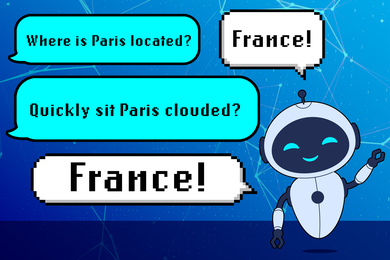
Large language models can learn to mistakenly link certain sentence patterns with specific topics — and may then repeat these patterns instead of reasoning.
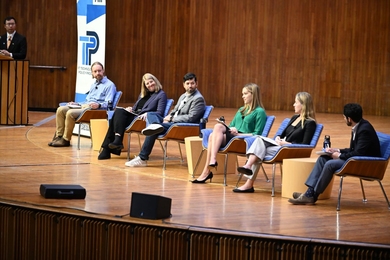
The MIT Technology and Policy Program marked 50 years with a symposium exploring its history of education, research, and impact — while looking ahead to technology policy issues of the future.
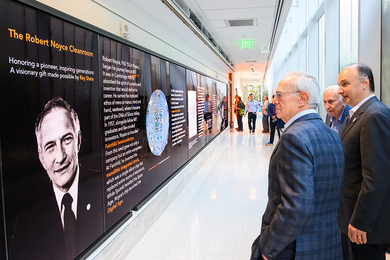
MIT.nano cleanroom complex named after Robert Noyce PhD ’53 at the 2025 Nano Summit.

Founded by a team from MIT, Lamarr.AI uses drones, thermal imaging, and AI to help property owners make targeted investments in their buildings.
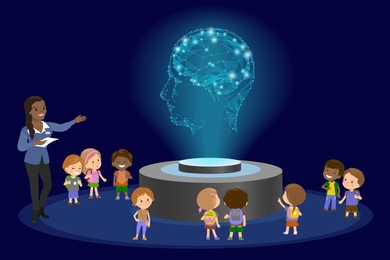
MIT’s Teaching Systems Lab, led by Associate Professor Justin Reich, is working to help educators by listening to and sharing their stories.
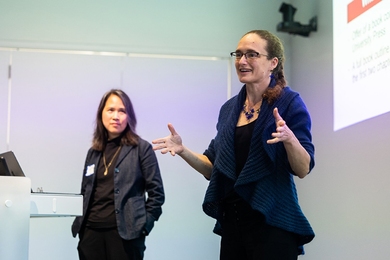
A presidential initiative, the MIT Human Insight Collaborative is supporting new interdisciplinary initiatives and projects across the Institute.
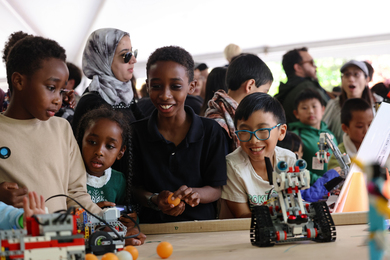
Organized by the MIT Museum, the 2025 Cambridge Science Carnival included activities with air cannons, sea bots, and electron microscopes.

How the MIT-IBM Watson AI Lab is shaping AI-sociotechnical systems for the future.

The former department chair was an early innovator in the use of artificial intelligence to both study and influence how children learn music.
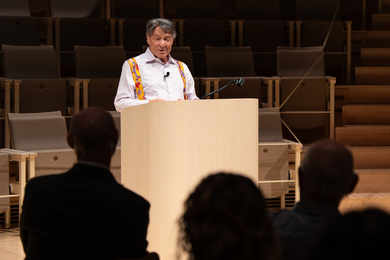
Receiving the Robert A. Muh award, the technologist and author heralded a bright future for AI, breakthroughs in longevity, and more.
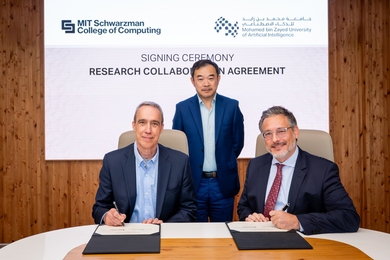
The MIT–MBZUAI Collaborative Research Program will unite faculty and students from both institutions to advance AI and accelerate its use in pressing scientific and societal challenges.
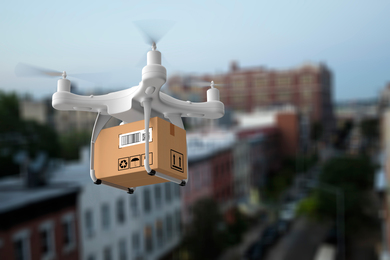
The approach could enable autonomous vehicles, commercial aircraft, or transportation networks that are more reliable in the face of real-world unpredictability.