The power of “and” in energy and climate entrepreneurship
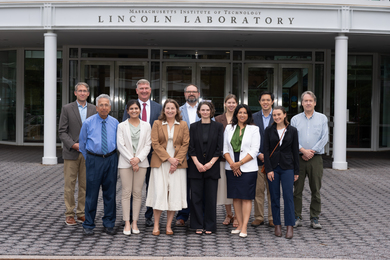
Greentown Labs CEO Georgina Campbell Flatter emphasizes the importance of collaboration in the entrepreneurship space, and the role that universities play in this landscape.
Rep. Jake Auchincloss visits the MIT Plasma Science and Fusion Center to learn about scaling geothermal energy.
In “Priority Technologies,” MIT faculty examine key areas of innovation that can drive American prosperity and security — now and in the decades ahead.
MIT Energy Initiative symposium maps a path to tap the planet’s heat-rich rocks for clean power at scale.
PhD student Carissma McGee studies exoplanets and examines intellectual property frameworks for space collaborations.
Strahinja Janjusevic brings an international perspective and US Naval Academy education to his graduate research in the MIT Technology and Policy Program.
Project AI Evidence will connect governments, tech companies, and nonprofits with world-class economists at MIT and across J-PAL's global network to evaluate and improve AI solutions.
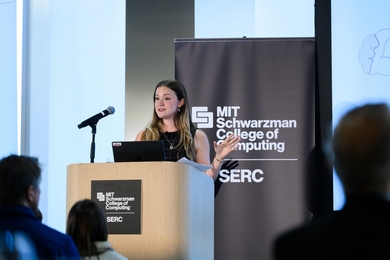
He joins Nikos Trichakis in guiding the cross-cutting initiative of the MIT Schwarzman College of Computing.
AtmosZero, co-founded by Addison Stark SM ’10, PhD ’14, developed a modular heat pump to electrify the centuries-old steam boiler.
MicroMasters coursework led engineer Kevin Power to MIT, where hands-on research in the MIT Supply Chain Management blended program transformed his professional trajectory.
Global Change Outlook report for 2025 shows how accelerated action can reduce climate risks and improve sustainability outcomes, while highlighting potential geopolitical hurdles.
The consortium convenes industry, academia, and policy leaders to navigate competing demands and reimagine materials supply.
Tools for forecasting and modeling technological improvements and the impacts of policy decisions can result in more effective and impactful decision-making.
Students and postdocs traveled to Washington to learn about federal science and technology policymaking.
Macro, a modeling tool developed by the MIT Energy Initiative, enables energy-system planners to explore options for developing infrastructure to support decarbonized, reliable, and low-cost power grids.