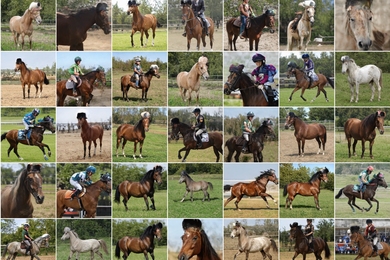
Rewriting the rules of machine-generated art
An artificial intelligence tool lets users edit generative adversarial network models with simple copy-and-paste commands.
An artificial intelligence tool lets users edit generative adversarial network models with simple copy-and-paste commands.

DUSP alumni Rushil Palavajjhala and Jacob Kohn empower vulnerable workers using social entrepreneurial and technical skills gained at MIT.
Through innovation in software and hardware, researchers move to reduce the financial and environmental costs of modern artificial intelligence.

Teaching community organizers via WhatsApp yields encouraging results in South Africa, according to MIT Governance Lab research.

Researchers capture our shifting gaze in a model that suggests how to prioritize visual information based on viewing duration.

MIT CSAIL researchers say improving computing technology after Moore's Law will require more efficient software, new algorithms, and specialized hardware.
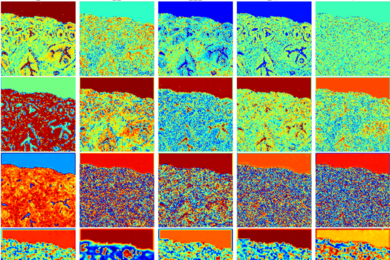
Pathologists who examined the computationally stained images could not tell them apart from traditionally stained slides.
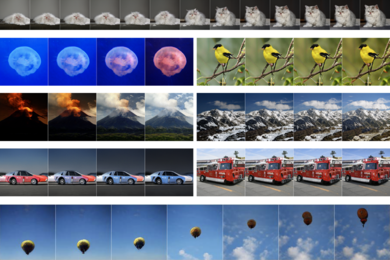
Researchers test how far artificial intelligence models can go in dreaming up varied poses and colors of objects and animals in photos.
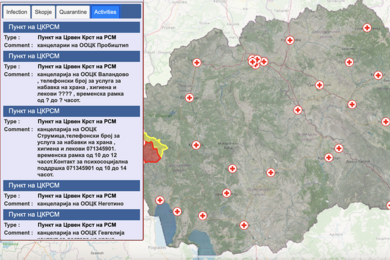
North Macedonia is using the Next-Generation Incident Command System to coordinate emergency services and inform the public about Covid-19 cases.
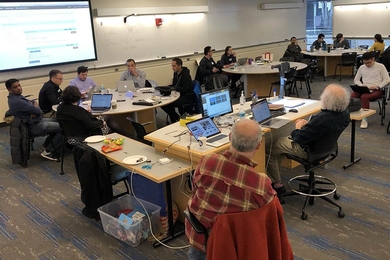
Three-day hackathon explores methods for making artificial intelligence faster and more sustainable.

Objects are posed in varied positions and shot at odd angles to spur new AI techniques.
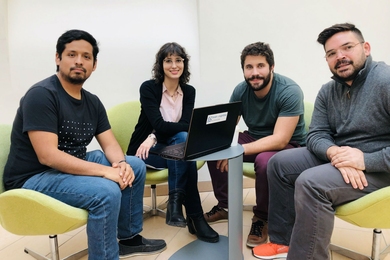
To help the region catch up, students organize summit to bring Latin policymakers and researchers to MIT.

New tool highlights what generative models leave out when reconstructing a scene.

International awards recognize innovations that can have significant impacts on society.
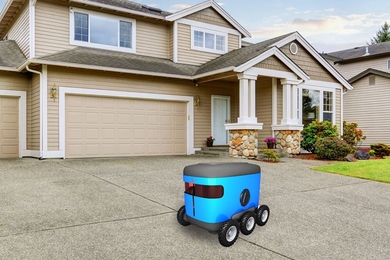
Navigation method may speed up autonomous last-mile delivery.