
New system gives users more control over their online experience
The Social.Wiki framework enables anyone to easily edit social websites within the system, while allowing them to choose the content they see.
The Social.Wiki framework enables anyone to easily edit social websites within the system, while allowing them to choose the content they see.

In Compton Lecture, the distinguished legal scholar warns of potential “loss of the Enlightenment” while suggesting ways innovations can meet our civic and cultural needs.

Professor Deb Roy contends there should be someone who is “answerable” for every piece of text in public life, no matter its origins.

The rising second-year loves telling stories about food and friends, from oxtail and ackee in Jamaica to Thanksgiving dinner in New Vassar, as an MIT Dining Ambassador.
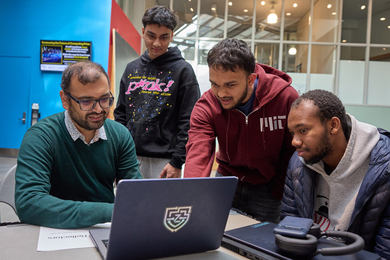
MIT computer science students design AI chatbots to help young users become more social, and socially confident.
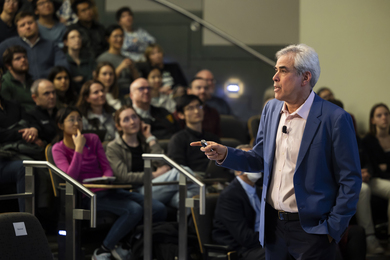
In Compton Lecture at MIT, social psychologist Jonathan Haidt warns of dramatic global decay in cognition, attention spans, and civic life, and urges curbs to tech use.
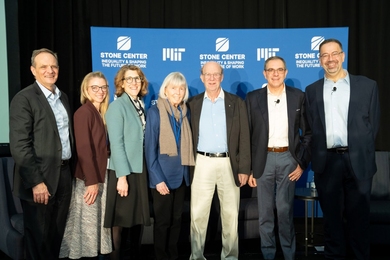
Recent launch event for the center featured discussions on pro-worker AI, wealth inequality, and the future of liberal democracy.

Researchers find that design elements of data visualizations influence viewers’ assumptions about the source of the information and its trustworthiness.

By enabling users to easily create social apps that serve communities’ needs, the Graffiti framework aims to promote healthier online interactions.

An analysis of social media in 157 countries finds hotter weather is associated with more negative sentiments.

Four new professors join the Department of Architecture and MIT Media Lab.

A computer vision study compares changes in pedestrian behavior since 1980, providing information for urban designers about creating public spaces.

Associate Professor Benjamin Mangrum’s new book explores how we use comedy to cope with the growth of computer technology in modern life.

The MIT Ethics of Computing Research Symposium showcases projects at the intersection of technology, ethics, and social responsibility.

Assistant Professor Manish Raghavan wants computational techniques to help solve societal problems.