
Study suggests words are needed to think about numbers
Among adults who vary in their knowledge of number words, the ability to reason about numbers is bound by the highest number they can count to.
Among adults who vary in their knowledge of number words, the ability to reason about numbers is bound by the highest number they can count to.
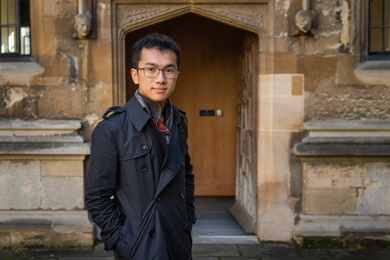
Senior Sihao Huang uses his background in physics and complex systems to inform his interdisciplinary approach to political science.

Thermal span in a layered compound promises applications in next-generation electrical switches and nonvolatile memory.

Geophysicists Camilla Cattania and William Frank team up to explore the tectonics and fault mechanics behind earthquakes, and their associated hazards.
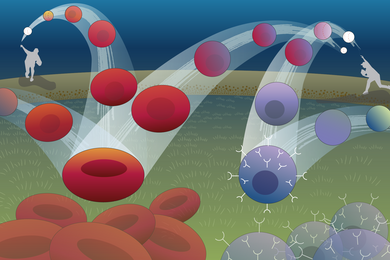
The technique can help predict a cell’s path over time, such as what type of cell it will become.
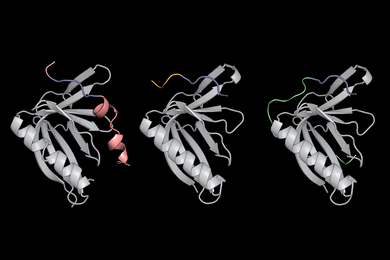
MIT biologists drilled down into how proteins recognize and bind to one another, informing drug treatments for cancer.
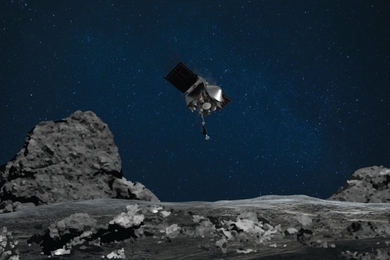
John L. "Jack" Swigert, Jr. Award for Space Exploration honors project team’s success harvesting a sample from asteroid Bennu.
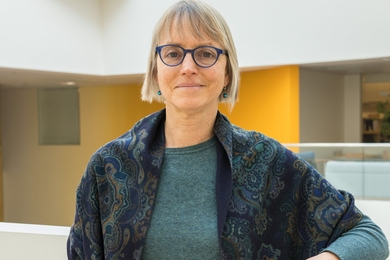
Professor and cognitive neuroscientist recognized for groundbreaking work on the functional organization of the human brain.

An accidental discovery and a love of spectroscopic perturbations leads to the solution of a 90-year-old puzzle.
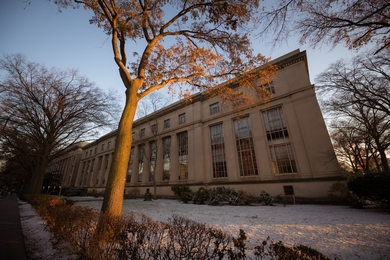
Eight postdocs and research scientists within the School of Science honored for contributions to the Institute.
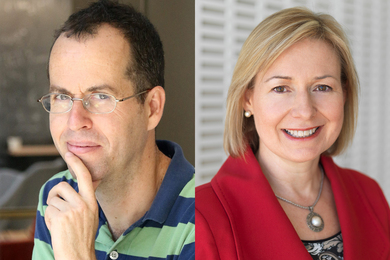
Fellowship honors ACM members whose accomplishments drive innovation and make broader advances possible.
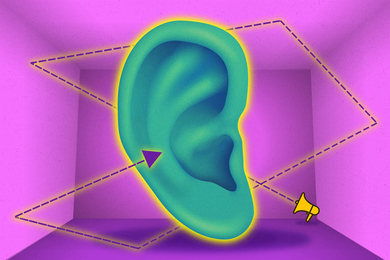
MIT neuroscientists have developed a computer model that can answer that question as well as the human brain.
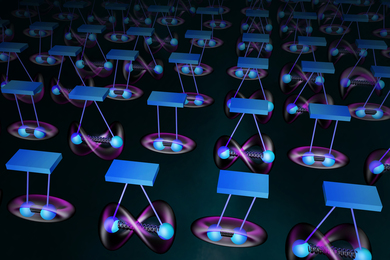
The new qubits stay in “superposition” for up to 10 seconds, and could make a promising foundation for quantum computers.
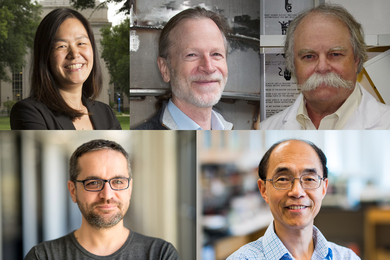
Dincă, Feng, Hunter, Shoemaker, and Wang are recognized for their efforts to advance science.
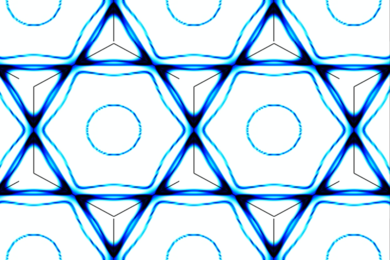
New work on superconducting kagome metal will aid design of other unusual quantum materials, with many potential applications.