
Method for stress-testing cloud computing algorithms helps avoid network failures
The “MetaEase” technique provides a heads-up to potential scenarios that could cause long wait-times or outages.
The “MetaEase” technique provides a heads-up to potential scenarios that could cause long wait-times or outages.
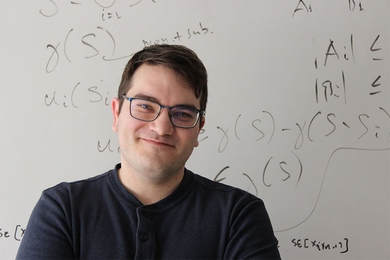
Assistant Professor Gabriele Farina mines the foundations of decision-making in complex multi-agent scenarios.
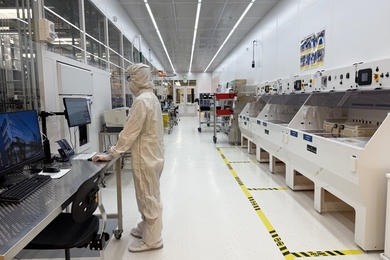
NanoFab Equipment Management and Operations (NEMO) system streamlines shared facilities management via tool trainings, reservations, and lab communications.

An old patent from MIT Professor Bill Freeman inspired the new “Y-zipper,” a three-sided fastener that snaps gear, robots, and art into shape at the push of a button.
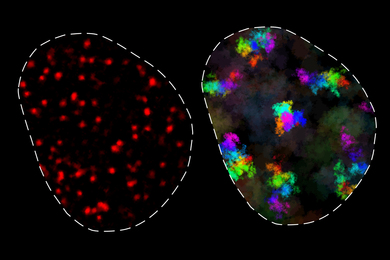
By monitoring these chromosomal structures over many timescales, MIT researchers found that chromatin helps bring genes closer to their regulatory elements.

Founded by Peter Godart ’15, SM ’19, PhD ’21, the company has developed technologies for extracting critical metals and making fuel out of aluminum.
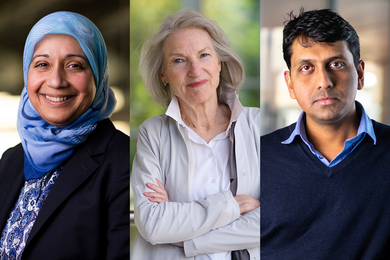
Afreen Siddiqi, Kathleen Thelen, and Vinod Vaikuntanathan, along with alumna Kate Manne, are appointed to the 2026 class of “trail-blazing fellows.”

Founded by Jake Donoghue PhD ’19 and former MIT researcher Jarrett Revels, the company is creating an AI-driven platform to help diagnose and treat disease.
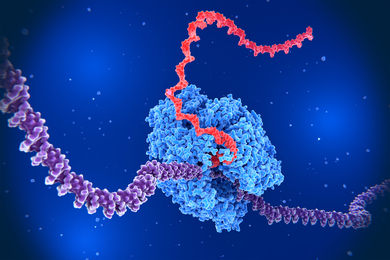
When genes are transcribed, they suppress or activate their neighbors, coupling expression between the two genes.
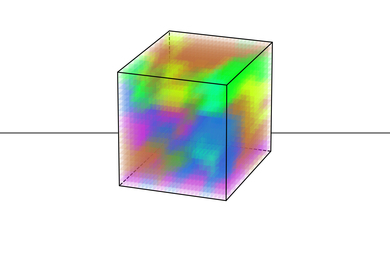
Relaxor ferroelectrics have been used in electronics and sensors for decades, but the source of their unique properties was a mystery until now.

In her new book, “Birds Up Close,” MIT materials engineer Lorna Gibson explores feathers, bones, bills, eggs, and flight, and the mechanics behind birds’ extraordinary abilities.

A new debiasing technique called WRING avoids creating or amplifying biases that can occur with existing debiasing approaches.

Based on the physics of how the instrument produces sound, the model could help violin makers in the design process.

A new method could bring more accurate and efficient AI models to high-stakes applications like health care and finance, even in under-resourced settings.