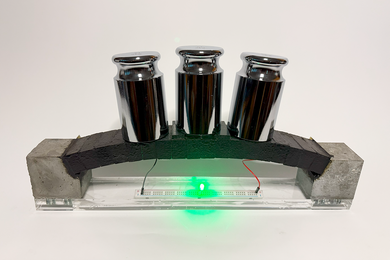
Concrete “battery” developed at MIT now packs 10 times the power
Improved carbon-cement supercapacitors could turn the concrete around us into massive energy storage systems.
Improved carbon-cement supercapacitors could turn the concrete around us into massive energy storage systems.
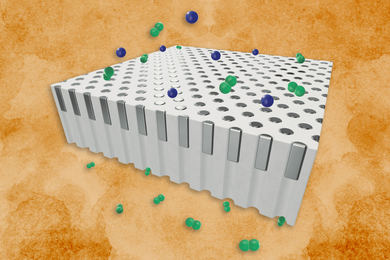
The novel design allows the membranes to withstand high temperatures when separating hydrogen from gas mixtures.

The findings may offer a new way to help heal tissue damage from radiation or chemotherapy treatment.

By enabling users to easily create social apps that serve communities’ needs, the Graffiti framework aims to promote healthier online interactions.

Sentences that are highly dissimilar from anything we’ve seen before are more likely to be remembered accurately.
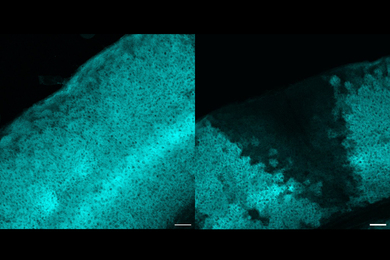
MIT researchers employed a novel application of tools and analysis to show that astrocytes ensure neural information processing by maintaining ambient levels of the neurotransmitter chemical GABA.

Mihaela Papa discusses the BRICS Lab, her role at the Center for International Studies, and the center's ongoing ambition to tackle the world's most complex challenges in new and creative ways.

The aircraft supports development and testing of diverse technologies for national security.

PhD student Chloe Gentgen discusses why the ice giant is such a high-priority solar system target, and how the Starship launch vehicle may hasten our explorations there.

The major public-private partnership is expected to strengthen MIT research and US leadership in astronomy and engineering.

Explosive growth of AI data centers is expected to increase greenhouse gas emissions. Researchers are now seeking solutions to reduce these environmental harms.
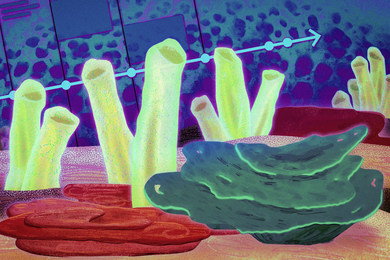
MIT researchers traced chemical fossils in ancient rocks to the ancestors of modern-day demosponges.

As an object moves across your field of view, the brain seamlessly hands off visual processing from one hemisphere to the other like cell phone towers or relay racers do, a new MIT study shows.
A new study finds over half the drugs approved this century cite government-funded research in their patents.

The new “CRESt” platform could help find solutions to real-world energy problems that have plagued the materials science and engineering community for decades.