
The “forgotten peace” of World War I
One hundred years after the Treaty of Lausanne, a look back shows its shortcomings for Armenians — and others.
One hundred years after the Treaty of Lausanne, a look back shows its shortcomings for Armenians — and others.
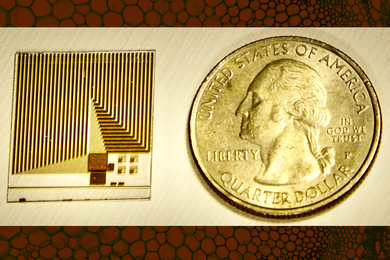
The device detects the same molecules that cell receptors do, and may enable routine early screening for cancers and other diseases.
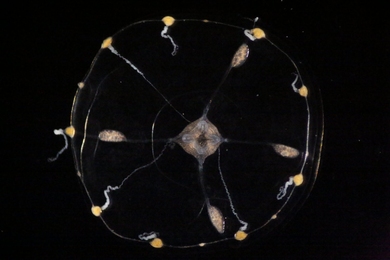
Three-year fellowship will support Weissbourd’s research on how the C. hemisphaerica jellyfish survives and thrives by constantly making new neurons.
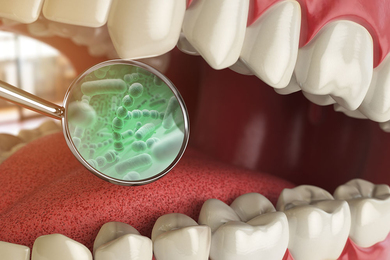
A new approach opens the door to a greater understanding of protein-microbe interactions.

A new technique helps a nontechnical user understand why a robot failed, and then fine-tune it with minimal effort to perform a task effectively.

Unique barcodes scannable in a mobile application will enable food-aid stakeholders to follow individual items from production through delivery.
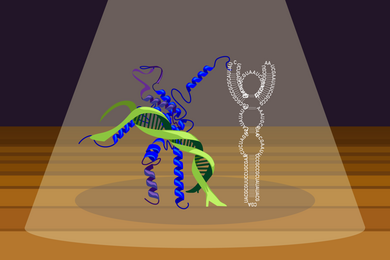
Whitehead Institute researchers find many transcription factors bind RNA, which fine-tunes their regulation of gene expression, suggesting new therapeutic opportunities.
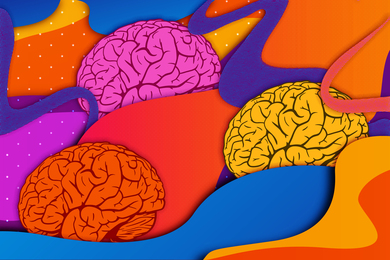
Distinctive EEG patterns indicate when a patient’s state of unconsciousness under general anesthesia is more profound than necessary.
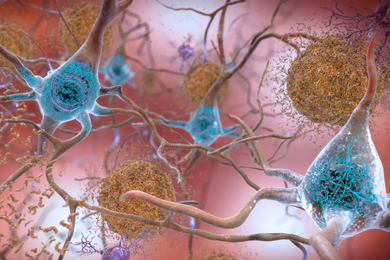
A new study shows that truncated versions of the Tau protein are more likely to form the sticky filaments seen in the brains of people with Alzheimer’s disease.
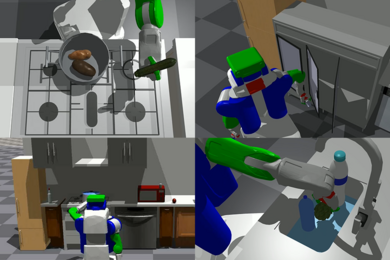
PIGINet leverages machine learning to streamline and enhance household robots' task and motion planning, by assessing and filtering feasible solutions in complex environments.

A new report by MIT researchers highlights the potential of generative AI to help workers with certain writing assignments.
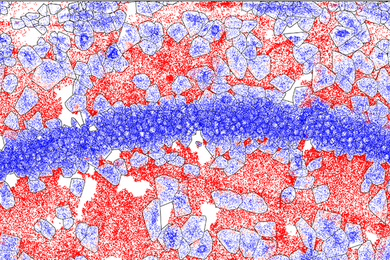
A new technology called RIBOmap can give researchers valuable insight into how protein production in animal and human tissue is altered in disease.
Researchers create a privacy technique that protects sensitive data while maintaining a machine-learning model’s performance.

Study shows that cities’ plans often won’t achieve their goals, but decarbonizing the local grid could make the difference.
In China, the use of AI-driven facial recognition helps the regime repress dissent while enhancing the technology, researchers report.