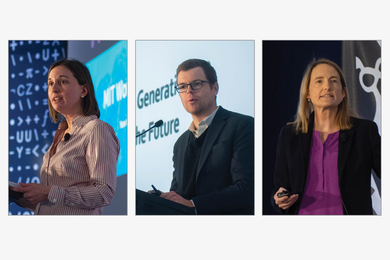
MIT launches Working Group on Generative AI and the Work of the Future
New initiative is convening leading companies and nonprofits with support from Google’s Community Grants Fund.
New initiative is convening leading companies and nonprofits with support from Google’s Community Grants Fund.

Global warming potential of sulfur hexafluoride (SF6) is more than 24,000 times that of carbon dioxide.

The 16 finalists — representing every school at MIT — will explore generative AI’s impact on privacy, art, drug discovery, aging, and more.

Study shows perceptions of “good” schools are heavily dependent on the preparation of the students entering them.
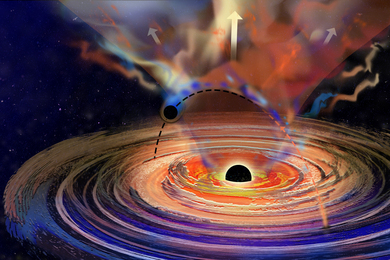
Analysis reveals a tiny black hole repeatedly punching through a larger black hole’s disk of gas.
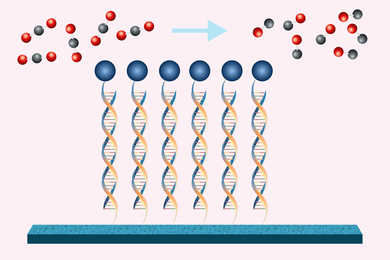
A catalyst tethered by DNA boosts the efficiency of the electrochemical conversion of CO2 to CO, a building block for many chemical compounds.

Screen-reader users can upload a dataset and create customized data representations that combine visualization, textual description, and sonification.

The new approach “nudges” existing climate simulations closer to future reality.

The sustainable and cost-saving structure could dissipate more than 95 percent of incoming wave energy using a small fraction of the material normally needed.
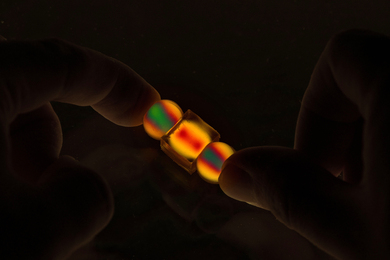
The behavior of granular materials has been difficult to visualize, but a new method reveals their internal forces in 3D detail.
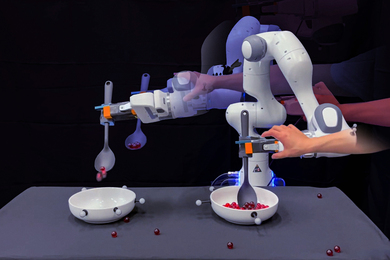
With help from a large language model, MIT engineers enabled robots to self-correct after missteps and carry on with their chores.

Researchers demonstrate a technique that can be used to probe a model to see what it knows about new subjects.
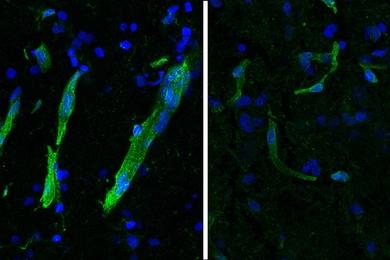
Single-cell gene expression patterns in the brain, and evidence from follow-up experiments, reveal many shared cellular and molecular similarities that could be targeted for potential treatment.

In order to recycle construction materials, keep them close to home, a new study of Amsterdam suggests.

This measure, developed by MIT researchers, reflects direct effects on people’s quality of life — and reveals significant global disparities.