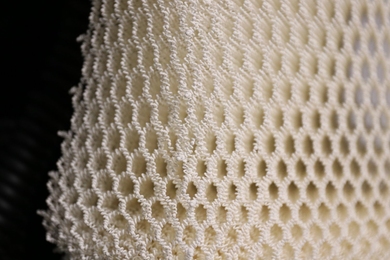
New general law governs fracture energy of networks across materials and length scales
Findings reported by MIT researchers may have significant implications in material design.
Findings reported by MIT researchers may have significant implications in material design.
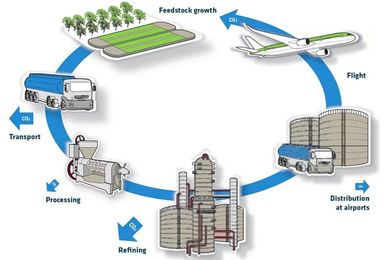
Special report describes targets for advancing technologically feasible and economically viable strategies.
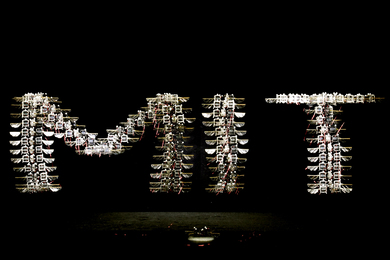
With a new design, the bug-sized bot was able to fly 100 times longer than prior versions.
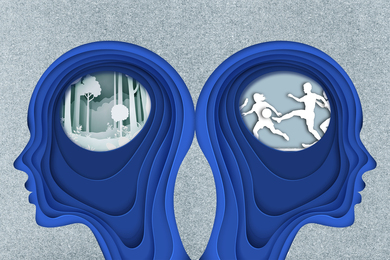
A new computational model explains how neurons linked to spatial navigation can also help store episodic memories.

The advance holds the promise to reduce error-correction resource overhead.

With their recently-developed neural network architecture, MIT researchers can wring more information out of electronic structure calculations.

Machine-learning models let neuroscientists study the impact of auditory processing on real-world hearing.
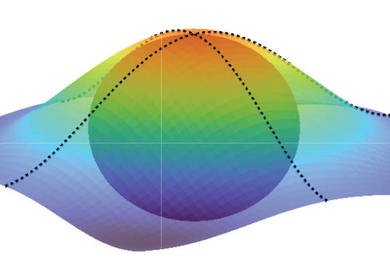
The work opens new avenues for understanding and manipulating electrons in materials.

Their source could be the core of a dead star that’s teetering at the black hole’s edge, MIT astronomers report.

An experiment in Amsterdam suggests providing better information to people can help move them out of “energy poverty.”
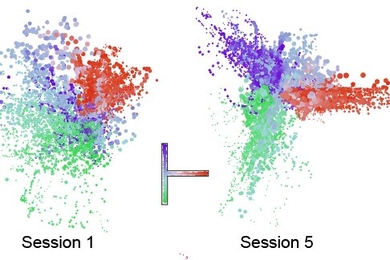
Place cells are known to encode individual locations, but research finds stitching together a “cognitive map” of a whole environment requires a broader ensemble of cells, aided by sleep, over several days.

Professor Evan Lieberman describes new research in which he and colleagues find a sharp partisan divide over providing aid to poor nations.

MAD Design Fellow Zane Schemmer writes algorithms that optimize overall function, minimize carbon footprint, and produce a manufacturable design.

Inspired by the human vocal tract, a new AI model can produce and understand vocal imitations of everyday sounds. The method could help build new sonic interfaces for entertainment and education.
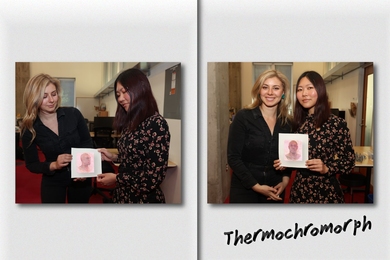
The Thermochromorph printmaking technique developed by CSAIL researchers allows images to transition into each other through changes in temperature.