
A faster problem-solving tool that guarantees feasibility
The FSNet system, developed at MIT, could help power grid operators rapidly find feasible solutions for optimizing the flow of electricity.
The FSNet system, developed at MIT, could help power grid operators rapidly find feasible solutions for optimizing the flow of electricity.

World Bank data show how the organization of programs influences political conflict — indicating a path to better aid delivery.
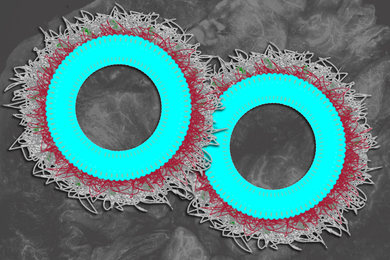
Targeted particles carrying the cytokine IL-12 can jump-start T cells, allowing them to clear tumors while avoiding side effects.
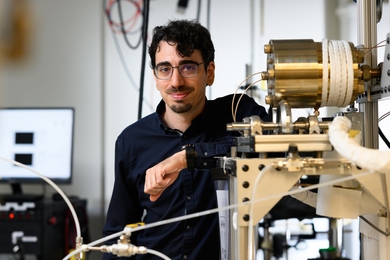
Marco Graffiedi, a doctoral student in nuclear science and engineering, is researching quenching processes to help cool nuclear cores, and NASA craft the next generation of space vehicles.

The findings point to state policies involving the presence of “pill mills” as influences on addiction over time.
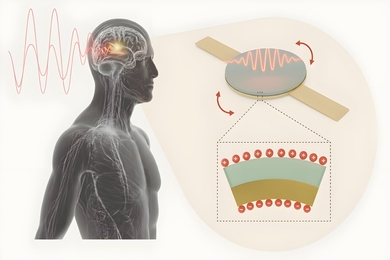
The technology would allow battery-free, minimally invasive, scalable bioelectronic implants such as pacemakers, neuromodulators, and body process monitors.
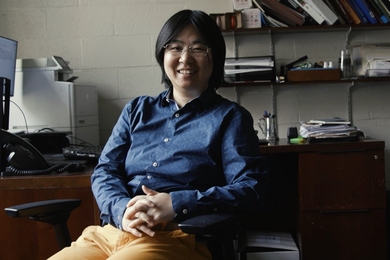
Sili Deng, the Doherty Chair in Ocean Utilization and associate professor of mechanical engineering at MIT, is driving research into sustainable and efficient combustion technologies.

While most states mandate screenings to guide early interventions for children struggling with reading, many teachers feel underprepared to administer and interpret them.

New research shows attention lapses due to sleep deprivation coincide with a flushing of fluid from the brain — a process that normally occurs during sleep.
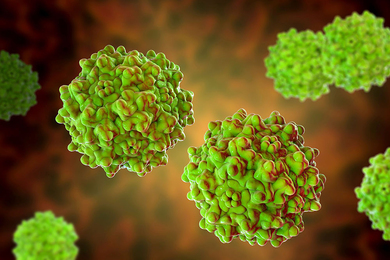
Selective crystallization can greatly improve the purity, selectivity, and active yield of viral vector-based gene therapy drugs, MIT study finds.
Adding amino acids to certain protein-based medications can improve stability and effectiveness. New MIT research demonstrates how it works.

The discovery will help researchers understand how chemicals form and change before stars and planets are born.

PhD student Miranda Schwacke explores how computing inspired by the human brain can fuel energy-efficient artificial intelligence.
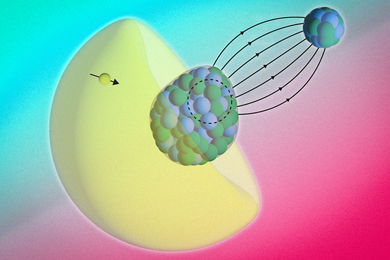
An alternative to massive particle colliders, the approach could reveal insights into the universe’s starting ingredients.
The DIGIT imaging tool could enable the design of quantum devices and shed light on atomic-scale processes in cells and tissues.