
Method for stress-testing cloud computing algorithms helps avoid network failures
The “MetaEase” technique provides a heads-up to potential scenarios that could cause long wait-times or outages.
The “MetaEase” technique provides a heads-up to potential scenarios that could cause long wait-times or outages.

New measurements of a hot Jupiter and its mini-Neptune companion suggest both planets formed surprisingly far away from their host star.

Associate Professor Dwai Banerjee’s new book examines the visionaries who wanted to turn India into a world power at making computers.
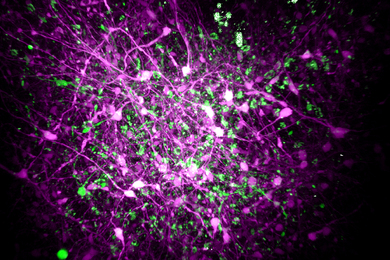
Using advanced human cell cultures, MIT researchers tracked how two different mutations alter neural circuit development, and how each could be addressed with distinct potential therapeutics.
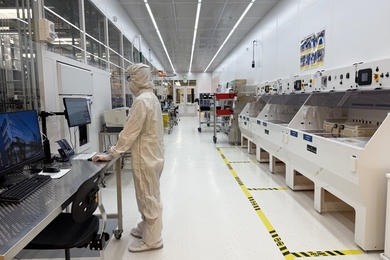
NanoFab Equipment Management and Operations (NEMO) system streamlines shared facilities management via tool trainings, reservations, and lab communications.
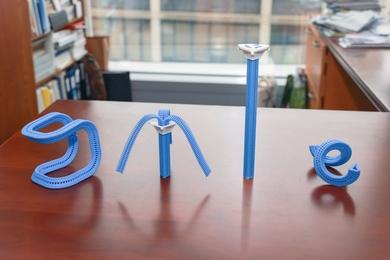
An old patent from MIT Professor Bill Freeman inspired the new “Y-zipper,” a three-sided fastener that snaps gear, robots, and art into shape at the push of a button.
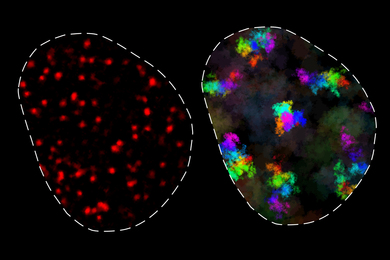
By monitoring these chromosomal structures over many timescales, MIT researchers found that chromatin helps bring genes closer to their regulatory elements.
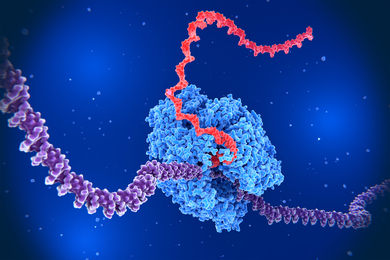
When genes are transcribed, they suppress or activate their neighbors, coupling expression between the two genes.
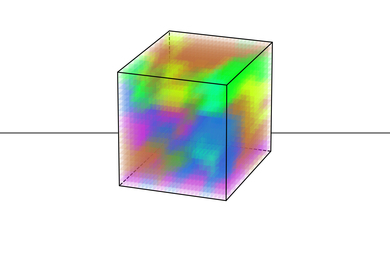
Relaxor ferroelectrics have been used in electronics and sensors for decades, but the source of their unique properties was a mystery until now.

Neural interaction with bacteria has important effects on animal brains. A new study investigates how neurons sense bacteria by revealing, in nematodes, the bacterial signals that a key neuron detects.
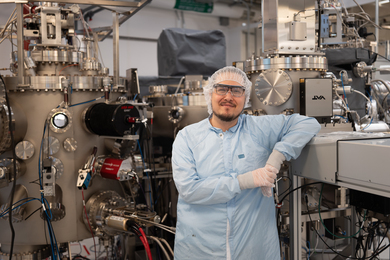

President Sally Kornbluth spoke in front of a packed crowd about growing challenges to the U.S. research ecosystem as funding for America’s top research universities becomes increasingly strained.

Economists find that in metro areas with more immigration, nurses are spending more time with elderly patients.

A new debiasing technique called WRING avoids creating or amplifying biases that can occur with existing debiasing approaches.

Building on a long-standing MIT–IBM collaboration, the new lab will chart the convergence of AI, algorithms, and quantum computing.