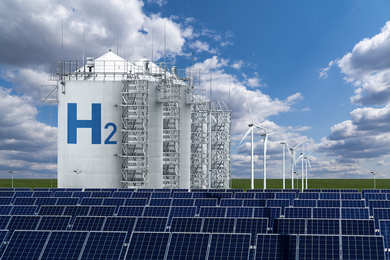
Coupling power and hydrogen sector pathways to benefit decarbonization
MIT-led team finds holistic optimization of electric power and hydrogen supply chain infrastructure is favorable for emission reductions and decreased infrastructure costs.
MIT-led team finds holistic optimization of electric power and hydrogen supply chain infrastructure is favorable for emission reductions and decreased infrastructure costs.
PhD student Limiao Zhang sees surprising connections between the behavior of cars and bubbles.

Professors Noelle Selin and Anne White will co-chair the Climate Nucleus, charged with managing and implementing MIT’s new plan.
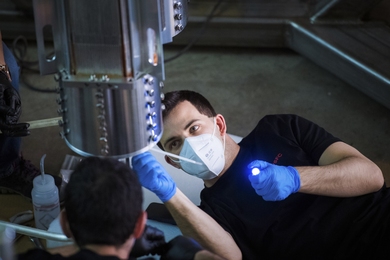
MIT engineer oversees design and testing of key magnet components for the Institute's SPARC fusion project.
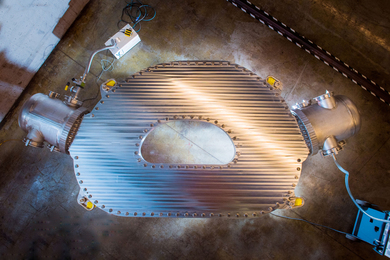
New superconducting magnet breaks magnetic field strength records, paving the way for practical, commercial, carbon-free power.
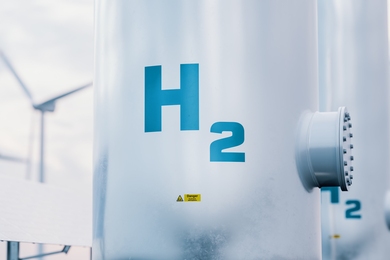
Analyzing California’s power system, MITEI researchers show that hydrogen-generated electricity is a cost-competitive candidate for backing up wind and solar.

Eli Paster SM ’10, PhD '14 is the CEO of PolyJoule, a startup working to reinvent energy storage technology to increase efficiency and reduce costs.
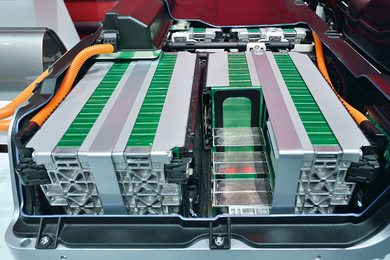
As researchers consider materials for solid-state batteries, they also may want to consider how those materials could impact large-scale manufacturing.
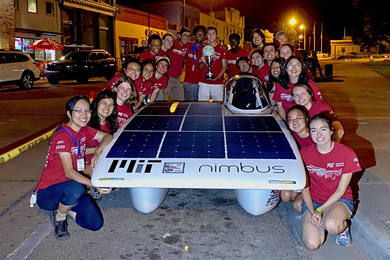
Student-designed Nimbus solar car travels 1,109 miles in five days, averaging 38.4 miles per hour.
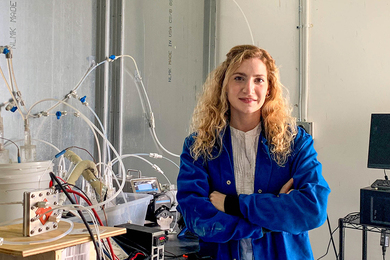
MIT team produces practical guidelines for generating hydrogen using scrap aluminum.
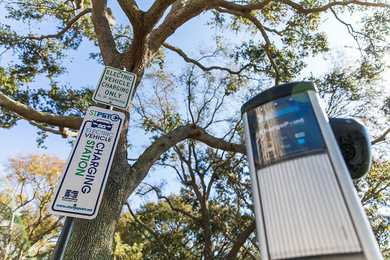
An MIT study gauges the pace of shifting to battery power.
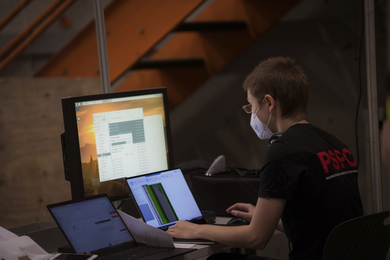
The Plasma Science and Fusion Center mechanical engineer embraces her role in modeling fusion magnets and in promoting engineering to young women.

Interest is growing in mining the ocean for valuable metals. A new study helps gauge the extent of the impact.
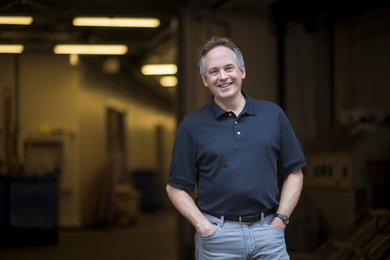
After decades of plasma physics research, Senior Research Scientist Brian LaBombard is taking on magnets for MIT’s new fusion effort.

Sustainability as a business imperative in supply chain management increased despite the pandemic, says MIT-led report.