
Geothermal energy turns red hot
MIT Energy Initiative symposium maps a path to tap the planet’s heat-rich rocks for clean power at scale.
MIT Energy Initiative symposium maps a path to tap the planet’s heat-rich rocks for clean power at scale.
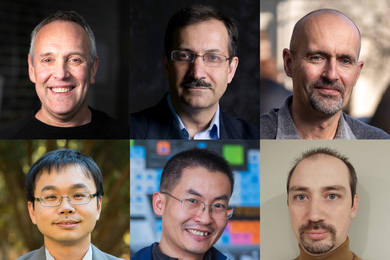
Two faculty and six additional alumni win top APS awards and prizes; four faculty and 12 additional alumni named APS Fellows.

The devices represent a key step toward practical quantum sensing, with applications in biomedical sensing, materials characterization, and more.
Graduate engineering program is No. 1 in the nation; MIT Sloan is No. 6.

Dean Price, assistant professor in the Department of Nuclear Science and Engineering, sees a bright future for nuclear power, and believes AI can help us realize that vision.

A new model measures defects that can be leveraged to improve materials’ mechanical strength, heat transfer, and energy-conversion efficiency.
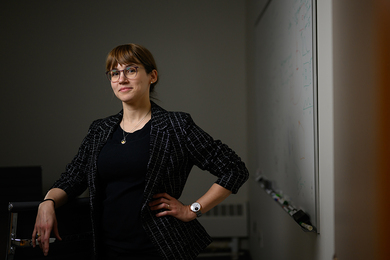
Sophia Henneberg, assistant professor in the Department of Nuclear Science and Engineering, is developing stellarators to harness fusion energy.

Master's student Taylor Hampson is modeling the behavior of an unconventional rocket engine that will heat propellant using nuclear energy.
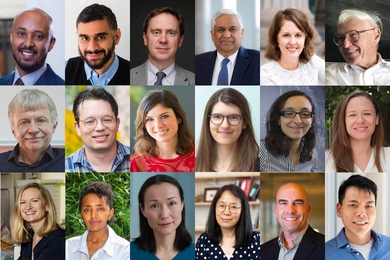
The program recognizes outstanding mentorship of graduate students.

In his 10 years at MIT, Loureiro helped illuminate the physics occurring at the center of fusion vacuum chambers and at the edges of the universe.

Nuclear waste continues to be a bottleneck in the widespread use of nuclear energy, so doctoral student Dauren Sarsenbayev is developing models to address the problem.
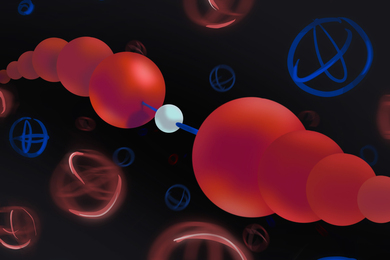
MIT researchers found a way to predict how efficiently materials can transport protons in clean energy devices and other advanced technologies.

The project was designed and built with novel “bio-composite” materials developed by the student team.
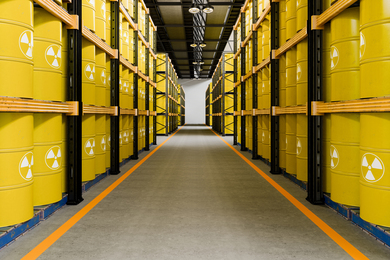
A new study by MIT researchers analyzes different nuclear waste management strategies, with a focus on the radionuclide iodine-129.
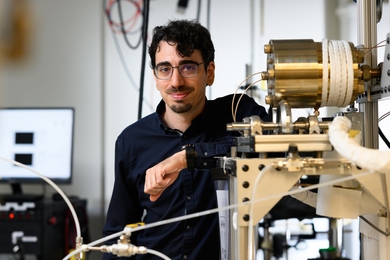
Marco Graffiedi, a doctoral student in nuclear science and engineering, is researching quenching processes to help cool nuclear cores, and NASA craft the next generation of space vehicles.